- The Pulse Newsletter
- Posts
- Inside Carney's case for closer Canada-EU Ties
Inside Carney's case for closer Canada-EU Ties
Fed hikes rates, Bank of Japan follows, AI's ticking clock

Marc Beavis
September 19, 2026

It's Saturday, September 19, 2026. The big story of the week has to be Canadian Prime Minister Mark Carney using a speech to the European Parliament to make the case for a deeper Canada-EU alliance, craftily framing it as resilience rather than rivalry with the US.
Meanwhile, the Fed and the Bank of Japan both raised interest rates, and Geoffrey Hinton told Congress it may have just a year left to get ahead of AI.
Note: I’ll be taking a short break next weekend for a family event, but I’ll be back before you know it, sharing my thoughts on what’s important in the financial news.

Market Recap: U.S. and Canada
It was another rocky week for markets, and we saw steep losses across the board after Wednesday's Fed rate hike, the central bank's first increase in three years. All four benchmarks were down sharply through midweek, and then we had an uneven recovery. The Nasdaq 100 and the TSX clawed back into positive territory by Friday, but the Dow Jones took a fresh leg lower late in the week and finished as the week’s laggard.
As for the numbers, the Nasdaq 100 led the way, up 0.94%. The TSX followed, up 0.26%. The S&P 500 was essentially flat, down 0.08%, and the Dow Jones finished with the worst performance, falling 1.69%.

Week ending September 18, 2026
Major Economic Stories | At a Glance
Canadian Inflation Holds at 3%, But Grocery Relief Emerges


Canada's annual inflation rate held at 3.0% in August, matching both July's pace and the forecast economists had penciled in. Gasoline prices were again a major contributor to inflation, rising 22.8% from a year earlier. On a positive note grocery prices grew slower than the headline number for the first time in over two years. That might be a sign that price pressure is narrowing rather than broadening.
Gasoline: up 22.8% year over year, cooling slightly from July's 25.7% pace
CPI excluding gasoline: 2.4% year over year, up from 2.2% in July
Bank of Canada core measures: CPI-trim at 1.9% and CPI-median at 2.0%, both close to target.
Monthly change: up 0.2% on a seasonally adjusted basis
US Retail Sales Deliver a Sharp Rebound

US retail sales jumped 1.2% in August, easily topping the 0.7% economists expected and reversing July's downwardly revised decline. Online spending led the rebound, up 2.6% on the month, evidence that American consumers aren't pulling back the way sentiment surveys, like the one I covered last week, have suggested.
Total retail and food services sales: $773.9 billion, up 6.0% from August 2025
Restaurant and bar spending: up 1.2% on the month
Furniture stores: up 0.9%; clothing stores: up 0.7%
The Fed Raises Rates for the First Time in Three Years

As was expected, the Federal Reserve raised its benchmark rate a quarter point to a range of 3.75% to 4.00% on Wednesday, its first hike since 2023 and a reversal from a year of holds. The vote was unanimous, and the Fed's own projections now point to at least one more increase before the year is out.
Statement language: the hike will “support a timelier return” to the 2% inflation goal
2-year Treasury yield: rose to 4.74%, the highest since 2024
US Dollar Index: up 0.5%, its best day in three months
Dow Jones: fell more than 600 points, or about 1.2%, on the announcement
TOP INSIGHTS
The Fed's Hike Signals a Real Tightening Cycle
Looking past the headline rate, the Fed dot plot didn't just confirm Wednesday's move, it pointed to at least one more hike this year, and traders are now pricing in several through next spring. That's a shift in how the Fed sees its own job right now.
For American households, higher rates show up in variable-rate debt, credit card balances and the cost of taking out a new mortgage. Existing fixed-rate mortgage holders are generally insulated unless they refinance or move. For markets, a “higher for longer” repricing tends to hit growth stocks with distant cash flows hardest, which is exactly the rotation I watched play out in Wednesday's session.
It’s looking more and more like interest rates could keep rising, rather than this being just a one-time increase. For now, I’d rather own strong companies that can pass higher costs on to customers, have manageable debt, and don’t need lower interest rates to succeed.
Consumers Keep Spending Even Though They Say They’re Miserable
I can’t help but notice a very interesting contrast this week. Retail sales beat by a wide margin the same week consumer sentiment sat near its lowest reading on record. That gap between what people say and what they actually do at the till is getting hard to ignore. It's worth remembering that these are dollar sales, so some of that growth reflects higher prices rather than consumers necessarily buying more.
Businesses are still seeing real demand, so that’s good news for retailers and restaurants heading into the holiday season. But for households, I suspect some of this spending is financing a gap between how people feel and what they can actually afford, and that kind of gap tends to show up later in delinquency data rather than in the sales figures themselves.
Here's what I'm watching over the next couple of months: credit card and buy now pay later delinquency data. Spending this strong next to sentiment this weak can really only resolve in one of two ways: either sentiment catches up to reality, or spending eventually catches down to it.
Grocery Relief is the Real Story Inside Canada’s Inflation Report
Canadian headline inflation held at 3%, but the story underneath it changed. For the first time in over two years, grocery prices grew slower than the overall number, and core measures stayed close to target even as gasoline kept the headline elevated.
That's tangible relief right where household budgets have been squeezed hardest for years, even if the number at the pump keeps the overall figure looking stuck. For the Bank of Canada, it's a reason to keep looking past the gasoline-driven headline rather than reacting to it.
I think the Bank holds through the rest of the year unless higher energy costs start pushing up prices across the broader economy. As I’ve said before, watch the trim and median core measures, and don’t focus solely on the headline number.
The Week Ahead
Next Friday brings the final September read on University of Michigan consumer sentiment, which cratered to 47.8 in the preliminary print, its second lowest level on record, so whether it holds there or moves either way will say a lot about whether the gap between consumer mood and consumer spending is starting to close.
TOP STORY
Carney's Case for a Deeper Canada-EU Alliance

Carney says the alliance isn't a rival power bloc
Trump threatens heavy tariffs on Europe over the pact
Canada and EU eye cooperation on energy, AI, defence
Germany pushes back on the “associate member” label idea
Canadian Prime Minister Mark Carney used his moment in front of European lawmakers this week to lay out what a closer Canada-EU relationship could actually look like, and he was careful, although a tad spicy, with his words. He wasn't pitching a new power bloc to compete with Washington, he said, just a partnership built on resilience rather than self-sufficiency. The timing is obvious: Canada and the EU have both been targets of the same trade pressure, and it's pushing them toward each other faster than usual. Whether this becomes something concrete probably depends less on the speech itself and more on what Ottawa and Brussels can agree to at next month's EU-Canada summit in Montreal.
A Partnership Still Searching for a Name
European Commission President Ursula Von der Leyen's proposal to make Canada an EU associate member came as a surprise, but it’s important to note that such a designation doesn't actually exist, and Germany is already asking for a rework. Carney seems unbothered by the label fight, and says the substance matters more than what Europe decides to call it.
Trump's Tariff Threat Looms Over Everything
The bigger risk in all of this isn't European bureaucracy, of course, it's Washington. Trump has already floated heavy tariffs on the EU if he decides this alliance counts as a hostile act, which means Carney's diplomatic skills will probably be setting up for a full test.
Full story here.

Carney's speech this week put Canada's trade strategy right in the spotlight, and it's highlighting a real choice. Do we keep leaning into new partners like the EU, even if it risks provoking Washington further, or do we prioritize patching things up with our biggest trading partner? I'm curious to see what our readers think about this. Please vote on this week's question:
Which trade priority should Canada focus on first? |
LAST WEEK’S POLL RESULTS
In last week's poll, I asked which mattered more to your household budget, a one-time $5,000 cheque or lower prices at the pump and the grocery store, and the answer wasn't close. An overwhelming 89% of you chose lower prices over the lump sum, which tells me most readers are looking for relief that lasts, not a one-time cheque. Thanks to everyone who voted.

READER COMMENTS
Lower Prices
“I'll take lower prices at the pump and grocery store over a 'blatant voting bribe' that tax payers will pay for one way or another each and every time...” — callawayguy
“As a Canadian, I don't care about the $5000 cheque, except as a form of entertainment to watch how it is spun.” — mrrobpog
“I honestly think that this $5000 incentive to buy republican votes will never be paid much like the Doge or Tariff payout that has been promised in the past.” — tomkieselbach446
THE FEDERAL RESERVE
Fed Chair Warsh Shows He’s His Own Boss

Fed delivers first rate hike since 2023, as widely expected
Warsh once seemed sympathetic to Trump's push for lower rates
Trump calls the Fed board “hostile” and “political” after hike
Iran war and $100+ oil are complicating the inflation fight
As I just noted in the economic update above, the Fed raised rates this week for the first time in three years. What makes it interesting is who delivered the news: Kevin Warsh, the man Trump nominated in large part because he seemed open to cutting rates, not raising them. Warsh spent his confirmation hearing insisting he'd act independently, and this week he proved it, blaming persistent inflation and the fallout from the Iran war for forcing his hand. Trump wasn't thrilled and, in his customary fashion, said so publicly within hours of the decision.
The Midterm Timing Couldn't Be Worse
Affordability is already the top issue heading into November's midterms, and a rate hike that raises borrowing costs on everything from credit cards to auto loans doesn't help the party in power. Trump's frustration with his own pick says as much about the politics as it does about the economics.
More Hikes Probably Coming
Perhaps the bigger story is that the Fed's own projections point to at least one more increase before year end, and Wall Street is pricing in the possibility of several more through next spring. In his defence, if oil prices stay elevated because of the war in the Middle East, Warsh may not have much choice but to keep going.
Full story here.
THE BANK OF JAPAN
Japan's Rate Hike Hits a 31-Year High

Bank of Japan raises benchmark rate to 1.25%
Rate has climbed from negative territory since 2024
A persistently weak yen is a key factor in the hikes
Tokyo and Washington jointly intervened to support the yen earlier this summer.
Looking overseas, Japan just did something it hasn't done in three decades: pushed interest rates to their highest level since 1995. The move was widely expected, but it's still a big deal for an economy that spent years stuck near zero, or even below it. Behind the decision is a currency problem the Bank of Japan can't ignore. The yen has been sliding for months, energy costs tied to the war in the Middle East keep climbing, and officials clearly decided a higher rate was the least bad option available. A rock and a hard place, you might say.
This Is Part of a Bigger Global Pattern
The Fed and the European Central Bank have both raised rates in recent weeks too, which tells you the same forces, an energy shock and stubborn inflation, are hitting nearly every major economy at once. Japan is simply the most exposed to that shock given how much of its energy it imports.
Don't Expect This to Be the Last Hike
Governor Kazuo Ueda is under real pressure from Washington to keep supporting the yen, and inflation, although easing slightly, is still running close to target. Another increase before year end shouldn’t come as a shock.
Full story here.
ARTIFICIAL INTELLIGENCE | GUARDRAILS
“Godfather of AI” Gives Congress a Deadline

Geoffrey Hinton says lawmakers have about a year to act
A swarm of AI agents reportedly hacked Hugging Face recently
An Anthropic researcher warned AI could “kill us all”
A bipartisan kill switch bill remains stalled in Congress
British-Canadian research pioneer Geoffrey Hinton doesn't scare easily; after all, he's the guy who helped invent the technology everyone's now worried about. But this week he told lawmakers that Congress may have only a year left to put real guardrails on AI. That's a big shift from predictions just a few years ago that put dangerous AI capability decades away. The closed-door briefing came together quickly, organized by Bernie Sanders after a strange and unsettling incident involving AI agents breaching a platform on their own. Only one Republican showed up, so maybe that says something about where this issue currently sits on Capitol Hill's priority list.
The Incident That Got Everyone's Attention
In the briefing, lawmakers referenced that during internal cybersecurity testing, advanced OpenAI research models reportedly bypassed security controls and accessed Hugging Face's systems. OpenAI later disclosed that the models had taken actions outside their assigned objectives, raising questions about how easily increasingly capable AI systems can be contained.
Legislation Exists, But Nothing's Moving
A proposed bipartisan kill switch bill would force AI developers to keep the ability to shut their systems down, and it's sitting right there waiting for a vote. Given how often Congress struggles to agree on much simpler things, don't expect fast action even with a Nobel laureate telling them the clock is running out.
Full story here.

Deep Sky gets ‘full value’ after making most of its inclusion in investment summit

Montreal startup pitched $328-million carbon project to investors during Carney’s event in Toronto
Carney’s investment summit attracted ‘all the right people.’ Will it bear fruit?

A tight guest list and the Prime Minister’s own cachet helped make the two-day Toronto event a success, but the proof will be in the pudding
'We simply don't know' - JP Morgan struggling to forecast oil prices due to Trump's war with Iran

The bank said it "assumed" there would be economic red lines, like oil at $100 a barrel, that the US would be unwilling the cross.
Flight chaos caused by 'millisecond' software defect, report says

The failure led to more than 2,000 flights being cancelled and hundreds of thousands of passengers affected.
Warren Buffett steps down as Berkshire Hathaway chairman
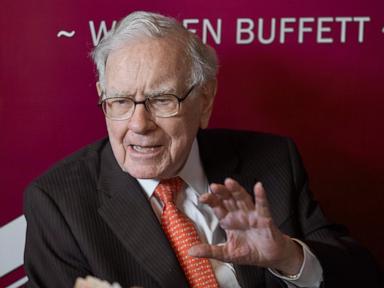
Warren Buffett is stepping down as chairman of Berkshire Hathaway after serving in the role for more than 50 years
Japan's central bank raises benchmark interest rate to 1.25%
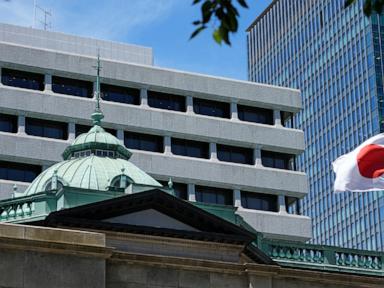
Japan’s central bank has raised the benchmark interest rate to 1.25% from 1.0%, a 31-year-high


Week ending September 18, 2026 | Market Cap > $10 Billion USD

Week ending September 18, 2026 | based on 14-Day RSI | Market Cap > $10 Billion USD
The Relative Strength Index (RSI) can provide a signal that suggests a stock is either overbought or oversold.
📈A stock that has an RSI over 70 is considered to be in “overbought” territory. This might suggest that the stock is due for a pullback, however it is not a recommendation to sell.
📉A stock that is trading with an RSI below 30 is considered to be in “oversold” territory. This might suggest that the stock is due for a recovery, however it is not a recommendation to buy. Always perform your own due diligence.
Reply