- The Pulse Newsletter
- Posts
- Dimon To Canada: Take A Deep Breath
Dimon To Canada: Take A Deep Breath
Five charts show where Canada's economy stands, Washington tightens AI grip, World Cup fans balk at tips

Marc Beavis
June 27, 2026

If you’ve been totally consumed by the World Cup tournament as we move into the elimination round, you may have missed the news this week. To help you catch up, here’s a quick rundown of what’s happening. First off, Jamie Dimon was in Toronto delivering a message that Canada's trade standoff with the US is manageable and the long-term case for this country remains intact. Also, OpenAI joined Anthropic in having its newest model gated by the Trump administration, and the 2026 World Cup has given us an unexpected culture clash story: international fans from Europe, Australia, and Japan are discovering American tipping norms for the first time, and they're not impressed.

Market Recap: U.S. and Canada
It was a rough week for US tech, with the Nasdaq bearing the brunt of a broad selloff that left most major indices in the red. Markets were largely on the defensive throughout the week, with selling pressure concentrated in technology and growth names. The Dow was a notable exception, holding up relatively well and finishing in positive territory, and Canadian stocks were essentially flat, drifting just below the breakeven line by Friday's close.
As for the numbers, the Dow Jones led the way with a gain of 0.60%, the TSX slipped fractionally, finishing down 0.11%, the S&P 500 dropped 1.95%, and the Nasdaq 100 was the week's clear underperformer, falling 3.96%.

Week ending June 26, 2026
Major Economic Stories This Week
Canada's Inflation Jumped In May, But The Core Tells A Different Story
Headline CPI rose to 3.2% in May, its fastest pace since December 2023.

Canada's headline inflation rate climbed from 2.8% to 3.2%, coming in above market expectations and hitting a level we haven't seen in nearly two and a half years. The drivers here aren't surprising: gasoline costs soared as Middle East conflict continued disrupting regional energy exports, and food prices followed higher fertilizer costs into fresh fruit and vegetables. The Bank of Canada's preferred core measures stayed remarkably steady. The trimmed-mean core rate held at 2.0% and the median core at 2.1%, sitting right where the BoC wants them.
Trimmed-mean core rate: 2.0%, median core rate: 2.1%, both stable month over month
Gasoline inflation: 33.2% in May, up from 22.8% in April
Food inflation: 3.8%, led by fresh fruit (+5.3%) and vegetables (+9.0%)
Shelter inflation: 1.7%, easing from 1.8% in April
US Durable Goods Orders Fell Sharply, But The Details Are Reassuring
New orders dropped 4.5% in May following two consecutive months of gains.

At first glance, a 4.5% drop in US durable goods orders looks alarming. Dig a little deeper, though, and it's a much cleaner picture. The entire decline traces back to nondefense aircraft and parts, which plunged 51.8%, a category known for enormous month-to-month swings that distort the headline figure. Strip out transportation entirely and orders actually rose 1.3%, beating expectations of a 0.6% gain. The closely watched non-defense capital goods excluding aircraft, the market's go-to proxy for business investment intentions, rose 1.6% after a downwardly revised decline of 0.7% in April. That's a meaningful swing in the right direction. Computers and electronic products also recovered modestly.
Non-defense capital goods ex-aircraft: +1.6% in May, reversing a revised -0.7% in April
Orders ex-transportation: +1.3%, surpassing the 0.6% forecast
Capital goods orders overall: -13.6%, dragged down by the aircraft collapse
Prior month (April) overall orders: revised up to +8.5% from original reading
Core PCE Held Steady At 3.4% Annually, Well Above The Fed's Target
The Fed's preferred inflation gauge matched expectations in May but remains its highest level since October 2023.

The core PCE number for May came in exactly where economists expected, which is both the good news and the bad news. Monthly, the index rose 0.3%, matching an upwardly revised April reading. Annually, it came in at 3.4%, the highest since October 2023 and still far above the Federal Reserve's 2% target. Energy price pressures tied to the Middle East conflict are feeding into broader price levels, and the annual rate is moving in the wrong direction. With the trimmed-mean core in Canada also holding steady, there's a consistent theme across North America: headline pressures are real, underlying inflation is stubborn, and central banks on both sides of the border are in a holding pattern.
Annual core PCE: 3.4%, highest since October 2023
Monthly core PCE: +0.3%, matching the upwardly revised April figure
Fed's target: 2.0%, leaving a 1.4 percentage point gap to close
Prior month (April) monthly reading: revised up from an earlier estimate
US Consumers Spent And Earned More In May, Though The Inflation Adjustment Tells A Sobering Story
Personal income and spending both rose 0.7% in May, but inflation-adjusted spending grew only 0.3%.


Income grew 0.7%, well above the 0.4% forecast, and spending matched at 0.7%. Both are rebounding from weak April readings. But the income number got a significant lift from farm proprietors' income, which jumped on the back of a second round of Supplemental Disaster Relief payments under the American Relief Act of 2025. Strip that out and the underlying picture is more moderate. Inflation-adjusted consumer spending rose just 0.3%, and real disposable personal income gained 0.3% after a 0.5% drop in April. Energy goods were the single largest driver of nominal spending gains.
Real disposable personal income: +0.3% in May, rebounding from a -0.5% drop in April
Spending on goods: +$61.8 billion, led by gasoline and energy (+$21 billion)
Proprietors' income: +$59.6 billion, tied to government farm relief payments
Employee compensation: +$66.8 billion, including wages and salaries of +$57.1 billion
TOP INSIGHTS
The Bank Of Canada Is In A Difficult Spot, And The Data Confirms It
Canada's headline inflation came in at 3.2%, well above target, while the core measures the BoC actually uses to set policy are sitting right at 2%. That gap is the whole problem. If the BoC reacts to the headline, it risks overtightening into an economy that's already dealing with slower growth. If it holds and the headline stays elevated, it risks losing credibility on inflation control. The external nature of the shock, energy and food prices driven by Middle East conflict, gives the Bank some cover to look through it, but only for so long. The longer commodity prices stay elevated, the harder it becomes to argue that core stability tells the whole story.
What this means for households is pretty obvious: grocery bills and fuel costs are getting worse, even if the underlying economy isn't falling apart. People feel inflation through those channels, not through trimmed-mean core rates, and that disconnect creates political and consumer confidence pressure that doesn't show up in the data. For the Bank of Canada, the credibility question is real. A central bank that appears to be ignoring visible inflation, even if technically justified, runs the risk of allowing expectations to drift.
I think the BoC sits on its hands for now, banking on the external shock narrative. But if we see another month of headline CPI at or above 3%, that story gets harder to sell.
The Fed Doesn't Have A Rate Cut Story Right Now
Core PCE at 3.4% annually isn't a number that opens the door to easing. It's the highest reading since October 2023, and it came in right on expectations, which means the market can't even frame this as a negative surprise to dismiss. The Fed is trapped in a familiar position: the data isn't deteriorating fast enough to justify cuts, but the cumulative weight of elevated rates is quietly doing damage to credit-sensitive parts of the economy. Consumer spending is still growing, but when we strip out energy-related purchases the inflation adjustment and real spending growth is modest at best.
What concerns me more than the top-line number is the composition of the income gains driving spending. A big portion of May's income boost came from government farm payments, a one-time programme payment that won't repeat. Private sector wages grew, but at a pace that doesn't really change the calculus. The consumer is spending, but some of that spending is being financed by transfers and, more and more, by credit card balances. JPMorgan's own Q1 data showed revolving credit balances rising steadily, even as consumers kept spending.
The market keeps pricing in cuts that probably won’t materialize anytime soon.
The Energy Shock Is Now Touching Everything
It's easy to frame the Middle East conflict as a geopolitical problem with a separate economic consequence, but I’d argue that the May data doesn't let you do that anymore. Gasoline inflation in Canada hit 33.2%. US personal spending got its biggest boost from gasoline and energy goods. US durable goods orders were distorted by aircraft orders tied to defence and energy sector dynamics. Core PCE is elevated in part because energy costs flow through services and goods pricing with a lag. And we’re seeing this consistently.
Energy and food, the two categories hit hardest, are the ones people can't easily substitute away from. You can delay buying a car or a new appliance, but we can’t realistically expect consumers to stop filling their tanks or feeding their families. That's why the headline inflation number carries a different emotional weight than the core numbers that economists prefer.
Here's where I think this is heading: if the Strait of Hormuz situation doesn't resolve by late summer, we're looking at another round of elevated headline prints on both sides of the border, with core inflation starting to follow as producers pass through higher input costs. That's the stagflationary scenario nobody wants to talk about directly. It's not necessarily the base case, but the data is now actively pointing toward it as a risk, and investors who aren't pricing some of that in are taking on more exposure than they may realize.
IN PARTNERSHIP WITH HARVEST ETFS
SPXE Has LIFTOFF | Access SpaceX with Monthly Income

The Harvest SpaceX Enhanced High Income Shares ETF (TSX: SPXE) launched on the TSX on June 15, 2026. SPXE offers enhanced exposure to SpaceX, one of the most ambitious companies on the planet. It is built to generate high monthly income through an active covered call strategy, and the application of modest leverage at approximately 25%.
Access to a market giant at a lower purchase price
Exposure to the space economy at scale
Invested in SpaceX: A proven, mission-driven operator
Pays monthly income
Own SpaceX, with income, in Canadian dollars
*See Harvest ETFs Disclaimer at the end of the newsletter
TOP STORY
Dimon Tells Canada: This Trade Tiff Won't Last
There won't be a divorce between Canada and the US
JPMorgan's Canadian revenue has nearly doubled over five years
Dimon corrected a Trump claim about US bank access in Canada
The bank plans to grow in Canada entirely through organic expansion
Jamie Dimon was in Toronto this week, and as is his style, he didn't hedge his words. The JPMorgan Chase CEO, who oversees the world's largest bank and has spent the past month meeting with Mark Carney in New York, the Mexican president in Mexico City, and Trump and Macron in Versailles, delivered a direct message to the Canadian business community: take a deep breath. Trade tensions are real, some industries are feeling sector-specific tariff pain, and Canada's economy is growing a little slower than it wants. But the underlying relationship between the two countries is too valuable to fall apart. His exact words: "There will not be a divorce."
Dimon Pushed Back On A Trump Claim About Canadian Banking
Trump has suggested that US banks aren't permitted to compete in Canada, a characterization Dimon said he inadvertently contributed to and then moved quickly to correct. JPMorgan can and does compete in Canadian commercial banking, investment banking, market-making, and payments. What it can't do is buy a large Canadian bank, because Canadian legislation caps ownership stakes at 10%. That grates against Dimon's free-market instincts, but he's made peace with it. Asked if he'd ever pursue a major Canadian bank acquisition, he said maybe, and then immediately confirmed JPMorgan's plan is to grow 100% organically.
The Opportunity Dimon Sees From Here
JPMorgan's Canadian revenue has nearly doubled over the past five years to more than US$3 billion annually, and Dimon sees more room ahead if the trade situation resolves and Canada follows through on its ambitions in defence, infrastructure, and energy. Canadian growth is facing real headwinds right now, but Dimon's broader point is that those are temporary. The long-term structural case, a country with natural resources, a stable financial system, and deep ties to the world's largest economy, remains intact. His parting message to Canada was blunt: "You're on the march, man. Just get the stuff done and get the politicians to approve good policies, and you will be going for decades.”
Read the full story here.

The relationship between Canada and the US is the defining economic question for this country right now, and this week it got a high-profile vote of confidence from one of the most powerful people in global finance, Jamie Dimon. Whether that confidence is well-placed is something reasonable people can disagree on. I'm curious to learn what our community thinks.
Please vote on this week's question:
What's your read on Dimon's Toronto visit? |
LAST WEEK’S POLL RESULTS
In last week's poll, I asked what you see as the bigger risk heading into the second half of 2026; rising inflation or a recession or growth slowdown. The community was nearly split right down the middle, with 53% choosing rising inflation and 47% leaning toward recession or growth slowdown. Thanks to everyone who voted in this closer than normal result.

READER COMMENTS
A recession or growth slowdown
"While I think 'rising inflation' & 'recession or growth slowdown' are both increasing risks in mid-2026, I chose the latter... Why? The consumer is breaking and I have a hard time seeing how growth won't slow, which ultimately leads to a recession IMO." — callawayguy
Rising inflation
"Our inflation will grow as we rush to build our economy, build our relationship with our new trading partners, develop our new markets. We will see a new Canadian economy expanding around Europe, Asia, South America & Mexico with growth in Canada which will enhance the wellbeing of our Citizens. We are very lucky to have a Prime Minister who knows the direction we must move. Better to have a leader who is smart and knows how to do it. We Canadians must start to think in a positive and productive way and stop listening to the negative stance of those that wish to create a negative wasteland. If we do not reject the meanderings of the Great Canadian Joke - Pierre Polivier we as a nation will rot away into nothingness." — entender1012
"Persistent inflation continues to outpace wage growth, creating a scenario where the daily struggle to cover basic living expenses will inevitably erode consumer spending on both retail goods and non-discretionary services." — storierod
ARTIFICIAL INTELLIGENCE REGULATION
The US Government Now Decides Who Gets The Best AI

OpenAI restricted GPT-5.6 Sol to roughly 20 approved customers
Anthropic's Mythos 5 got a partial reprieve after two weeks offline
Trump signed an executive order allowing 30-day government vetting of frontier AI
OpenAI said this shouldn't become the long-term default for releases
The AI industry crossed a threshold this week that would have seemed unlikely even six months ago. OpenAI announced it's restricting its newest model, GPT-5.6 Sol, to a small group of roughly 20 customers pre-approved by the Trump administration following a directive from the White House. That same day, Anthropic announced that Mythos 5, which had been pulled offline entirely two weeks ago after the Commerce Department effectively banned it, has now been partially reinstated for a limited group of cyber defenders and infrastructure providers. Both companies are now operating under a framework where Washington decides who gets access to the most capable AI tools first.
How We Got Here
The chain of events began when Anthropic warned earlier this year that its Mythos model was unusually adept at finding software vulnerabilities, in ways that could be weaponized. That disclosure, combined with Trump's broader push to assert government oversight of frontier technology, led to an executive order in early June establishing a 30-day vetting window for the most advanced AI systems. When Anthropic released Fable 5, a safer version of Mythos with built-in safeguards, the government pulled it anyway. Stanford cybersecurity expert Alex Stamos said publicly that practically nobody in the cybersecurity industry saw a factual basis for that action. OpenAI has been proactively working with Commerce Secretary Howard Lutnick to stay ahead of the same fate. The source framing was: GPT-5.6 has "Mythos-like" capability, so the same rules apply.
What This Means For The Industry Going Forward
OpenAI was clear it doesn't want this to be permanent, but the precedent is already set. The government's heightened oversight also complicates both companies' stated ambitions to go public on Wall Street, following SpaceX's record IPO earlier this month. Trump has separately floated the idea of the US government taking ownership stakes in leading AI companies. Whether this is temporary friction or the beginning of something more structural is the question the entire sector is now sitting with.
Read the full story here.
THE ECONOMY
Canada's Economy Is Struggling. Here's How Bad It Really Is.

Canada slipped into a technical recession in late 2025 and early 2026
Youth unemployment sits at 13.4%, well above pre-pandemic averages of about 10%
Canadian households carry the largest debt burden among G7 nations
More than 70% of Canadian exports go to the US, where tariffs are still biting
Canada's economy is under real pressure, and a new BBC analysis out this week lays it out in plain terms. The country slipped into a technical recession in late 2025 and early 2026, two consecutive quarters of GDP contraction triggered largely by US tariffs and global supply chain disruption. The IMF forecasts 1.6% growth for 2026, which puts Canada ahead of most European G7 partners but still trailing the US. Economists are cautioning against panic, given the modest scale of the decline, but they're not dismissing the underlying weakness either. As the CD Howe Institute's Jeremy Kronick put it: "The economy is weak, right?" That's not a ringing endorsement of where things stand.
Who Is Actually Feeling It
The pain isn't evenly distributed. Younger Canadians are bearing a disproportionate share: youth unemployment is at 13.4%, the first decline since January but still well above the pre-pandemic average of roughly 10%. Renters are under pressure, with 45% saying their financial situation is tough or very difficult. Canadian households overall carry the G7's highest debt load, most of it in mortgage debt, which builds equity for existing owners while locking many younger Canadians out of the market entirely. The housing split is creating two very different economic experiences inside the same country, one for people who got in, and one for everyone who didn't. As I just noted in the economic update above, inflation at 3.2% is compounding the cost-of-living pressure on top of all of this.
The Structural Problems That Predate The Tariffs
The tariff fight with the US gets most of the headlines, but in addition to that, Canada also has structural issues that are harder to fix by negotiation. Inter-provincial trade barriers, from different trucking standards to fragmented professional licensing, act as a quiet tax on domestic productivity. The tax system, by some assessments, is uncompetitive relative to the US and other peers. More than 70% of Canadian exports head south of the border, which means any deterioration in the trade relationship hits harder here than it would in a more diversified export economy. Businesses like Wellmaster in Ontario, where US tariffs have cut sales by 20%, are living that reality right now. Prime Minister Carney's government is betting that doubling non-US exports over the next decade and fast-tracking infrastructure can change the picture.
Read the full story here.
THE WORLD CUP
World Cup Fans Are Getting A Crash Course In American Tipping Culture

International fans from Europe, Australia, and Japan say tipping culture is confusing and expensive
Some US restaurant staff earn as little as $2.13 an hour and depend on tips to survive
One Brooklyn bar owner now pre-charges for drinks to protect staff from non-tipping tourists
Visitors say high ticket prices plus tips are pushing their budgets to the breaking point
The 2026 World Cup has brought millions of international visitors to American cities, and along with their scarves and flags, they've brought a genuine culture shock: US tipping norms. Fans from Australia, Japan, England, and across Europe are encountering a system where servers at some restaurants and bars earn just over $2 an hour in base wages, and a 20% tip is considered standard. In Atlanta, the minimum cash wage for a tipped server is $2.13 an hour. For visitors accustomed to all-inclusive pricing at home, the math is catching them off guard, as many say they didn't fully understand the system before arriving.
The System Isn't Working For Either Side
The frustration is running in both directions. Bar owner Chris Keller of Banter in Brooklyn told the BBC that European tourists are notoriously poor tippers, and that he's had to change his reservation system so that drinks are pre-charged with a service fee to protect his staff. At Hurley's Restaurant in New York City, staff are having conversations with customers who drop $600 on food and drinks and leave nothing behind. The response from fans is often genuine confusion. In countries where service charges are built into menu prices, many visitors genuinely don't know what's expected until someone explains it to them. That gap between cultural expectation and local reality is creating friction in venues all across the host cities.
A Debate The World Cup Is Forcing Into The Open
The broader debate that’s surfacing is about whether a system that puts the burden of employee wages on customers rather than employers makes sense, and whether the World Cup moment is exposing its limits. Many restaurant owners are split on the solution. Some, like Joseph Pitruzelli of Wurstküche in Los Angeles, keep suggested tip prompts in the 10-20% range because they see higher prompts as excessive. Others say any tip is essential because without it, staff simply can't cover their basic costs. The World Cup won't resolve the debate, but it's handing it an unusually large and vocal global audience.
Read the full story here.
SPXE Has LIFTOFF | Access SpaceX with Monthly Income

If improved affordability prevents homebuilding, something is broken

Canada appears to have built a housing market that constructs homes only when housing becomes less affordable
Canada built the Gordie Howe bridge. Trump weaponized it

Preventing the bridge from opening is a weaponization of infrastructure

Refining cobalt in Cobalt, Ont.? That's the plan for this northern Ontario town
A facility near Cobalt, Ont., has been tapped to be the home of North America's first battery-grade cobalt refinery. Projected to be fully operational by late 2027, the plant will import and process mined cobalt — experts say it could bring Canada into an industry dominated by China.

OpenAI restricts release of newest ChatGPT model to Trump-approved group during testing period
OpenAI says its new AI product, called GPT-5.6 Sol, will only be initially available to a "small group of trusted partners" approved by the Trump administration. The move comes after OpenAI's rival, Anthropic, took two of its models offline shortly after release to comply with a Trump directive.
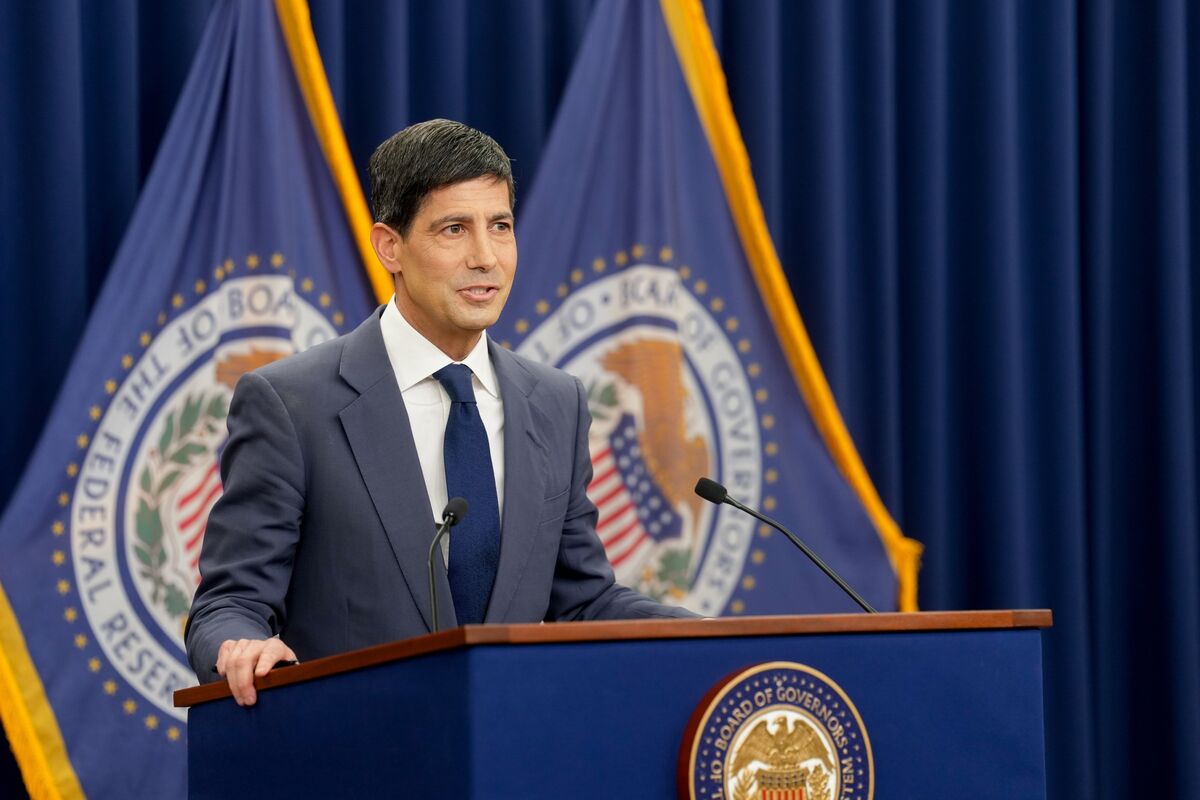
Warsh Makes Debut on the Global Stage With the Class of 2008
Kevin Warsh and three other veterans of the 2008 global financial crisis will share a stage this week as the danger of renewed turmoil continues to haunt central bankers.

Tech Equity Sales Renew AI Debt-Binge Worries
Tech companies are selling stock like it’s the dot-com boom, and some investors fear that’s a bad sign for bondholders.
Trump threatens 100% tariff on European nations over tech tax

The US president says "Numerous European countries" have been discussing bringing in such a levy.
Three unusual things about the King's tax bill
King Charles paid £12.9m in tax for 2024-2025 - here's what we know about his unique tax situation.
Asian shares plunge as traders sell to lock in profits from latest rallies driven by boom in AI related stocks

Asian shares plunge as traders sell to lock in profits from latest rallies driven by boom in AI related stocks
Hollywood gets into the microdrama race as mobile-first storytelling draws stars

Mobile-first serialized storytelling is rapidly becoming one of entertainment's fastest-growing businesses


Week ending June 26, 2026 | Market Cap > $10 Billion USD

Week ending June 26, 2026 | based on 14-Day RSI | Market Cap > $10 Billion USD
The Relative Strength Indicator (RSI) can provide a signal that suggests a stock is either overbought or oversold.
📈A stock that has an RSI over 70 is considered to be in “overbought” territory. This might suggest that the stock is due for a pullback, however it is not a recommendation to sell.
📉A stock that is trading with an RSI below 30 is considered to be in “oversold” territory. This might suggest that the stock is due for a recovery, however it is not a recommendation to buy. Always perform your own due diligence.
*Harvest ETFs Disclaimer
Commissions, management fees and expenses all may be associated with investing in ETFs managed by Harvest Portfolios Group Inc. (the “Funds” or a “Fund”). Please read the relevant prospectus before investing. The Funds’ returns are not guaranteed, their values change frequently, and past performance may not be repeated. Tax investment and all other decisions should be made with guidance from a qualified professional.
The Fund is categorized as a liquid alternative ETF. This means it has the ability to use leverage and can invest more than 10% of its assets in a single issuer. The Fund employs modest leverage of approximately 25%, which can amplify both gains and losses.
All rights to the trademarks and/or logos listed herein belong to their respective owners and Harvest ETFs use hereof does not imply any affiliation with, or endorsement by the owners of these trademarks and/or logos.
Reply