- The Pulse Newsletter
- Posts
- Chipmakers Steal Big Tech Crown
Chipmakers Steal Big Tech Crown
Canada's strong GDP, rate hike bets rise, Venezuela's oil deal

Marc Beavis
August 30, 2026

It’s Sunday, August 30, 2026. This week's big storylines: Nvidia's blockbuster quarter pushed chipmakers past Big Tech, Canada's GDP surprised to the upside in the face of the ongoing trade war, the bond market started pricing in a Fed rate hike after Kevin Warsh's Jackson Hole speech, and Trump struck a deal putting Venezuela's oil under U.S. control.
Also, our regular readers will notice a couple of new additions to the Pulse. I’ve highlighted some of the more interesting stock stories of the week, and you can now select the stock ticker to go to its page on blossom social, where you can take a deeper look at the company and hear what other investors are saying. Also, I’ve added a ‘look ahead’ to what we can expect next week. Hope you enjoy the new additions.

Market Recap: U.S. and Canada
It was a rocky start to the week, but the markets found their footing by the end of Friday’s trading session. The Nasdaq spent the first few days deep in the red before a sharp reversal took hold, and Canadian stocks did the opposite, leading the pack through midweek before giving back those gains by Friday.
As for the numbers, the Dow Jones led the way this week, up 0.53%, followed by the S&P 500, up 0.49%, and the Nasdaq 100, up 0.43%. The TSX lagged the pack, down 0.19%.

Week ending August 28, 2026
NEW SECTION: Notable Stocks This Week
Salesforce ($CRM) jumped 22% on Thursday after posting one of its strongest quarters on record and unveiling an expanded partnership with Anthropic. Revenue rose 11% to $11.35 billion and adjusted earnings came in at $5.90 a share, well above the $3.27 analysts expected, helped in part by a $2.6 billion gain on the company's Anthropic investment stake. It also introduced Claudeforce, a plugin built with Anthropic's Claude that can draft emails and update records for sales teams, framing AI as a tailwind for its own business rather than a threat.
CrowdStrike ($CRWD) climbed 20% on Thursday, its best day since going public, after fiscal second quarter results beat expectations across the board. Revenue rose 26% to $1.47 billion, and net new annual recurring revenue hit a record $333 million, up 51% from a year earlier. Management raised its full year guidance again, its ninth straight quarter of beating and raising, a streak that's helping justify a valuation many analysts still call rich.
SanDisk ($SNDK) fell about 6% on Monday after reports surfaced that the Trump administration may let Apple source memory chips from Chinese suppliers ChangXin and Yangtze Memory. The stock had already climbed more than 500% this year on sharply higher NAND prices and heavy AI related demand, so the pullback shows how sensitive the name has become to any hint of new competition. Analysts at Lynx Equity Research called the reaction an overreaction, noting neither Chinese supplier has qualified for Apple's core products yet.
TD Bank ($TD) rose on Thursday after posting the strongest earnings beat among Canada's Big Six banks this quarter. Net income climbed 38% to C$4.62 billion, or C$2.74 a share, with wholesale banking net income up 87% and the U.S. segment up 41%. Executives said they're planning 100 new U.S. branches by 2028, a sign the bank isn't slowing its cross-border push even as trade tensions with Washington weigh on the broader Canadian economy.
Major Economic Stories | At a Glance
Incomes Outpace Spending as Households Save More


Personal income rose 0.4% in July, outpacing a 0.2% gain in consumer spending as Americans banked more of what they earned. The personal saving rate climbed to 3.0%, with households tucking away $712 billion for the month even as paycheques grew.
Disposable income: up 0.5%, an increase of $125.9 billion
Spending mix: $86.2 billion increase in services spending, partly offset by a $49.9 billion drop in goods spending
Real (inflation adjusted) spending: essentially flat, up less than 0.1%
Income gains driven mainly by higher compensation, government benefits, and investment income
Fed's Favoured Inflation Gauge Refuses to Cool

Core PCE inflation held at 3.3% year over year in July, matching consensus and unchanged from June, while the headline measure ticked up to 3.7%, a touch hotter than expected. The reading shows the disinflation trend from earlier this year has stalled rather than reversed, leaving the Fed's preferred gauge still well above its 2% target.
Core PCE monthly change: 0.2%, matching June's pace
Headline PCE monthly change: 0.2%, a tenth above the median forecast
Distance from target: core PCE running 1.3 percentage points above the Fed's 2% goal
Next release: August data due September 30, alongside the BEA's annual accounts update
Canada's Economy Posts Its Best Quarter Since 2023

Canada's GDP grew 3.3% annualized in the second quarter, just below the 3.4% economists expected but comfortably ahead of the Bank of Canada's own 2.5% forecast. Exports jumped 15.1% annualized, the fastest pace in three years, as auto production rebounded and household spending held up.
Q1 growth revised from 0.0% to 0.1% quarter over quarter, avoiding a technical recession
Consumer spending: up 3.3% annualized, building on a 2.4% gain in Q1
Per capita GDP: up 3.8% annualized, the fastest pace since late 2021
Preliminary July estimate: flat, pointing to lost momentum heading into Q3
TOP INSIGHTS
Consumer Spending Growth Was an Inflation Illusion
In the U.S., nominal consumer spending rose 0.2% in July, but once you adjust for the month's price increases, real spending barely budged. That gap between the nominal and real numbers matters more than either figure on its own: the modest spending growth headline writers focused on this week was mostly a function of higher prices rather than stronger demand for goods and services.
For those of us trying to gauge how the U.S. economy is actually performing right now, this is the more useful number than the headline income or spending figures. Retailers and consumer facing businesses that had been counting on steady real volume growth this quarter are instead facing a customer base that's paying more for the same basket rather than buying more of it, a distinction that shows up in same-store sales and margins well before it shows up in GDP.
I think this is an early signal that third-quarter GDP growth could look softer in real terms than the nominal spending numbers suggest, even if the headline income and spending figures keep looking fine on the surface. I'm watching August retail sales when they land in a couple weeks for confirmation of whether real volumes are actually holding up or just tracking inflation.
Inflation's Progress Has Hit a Wall
US Core PCE inflation has now sat at 3.3% for two straight months, and Michigan's consumer sentiment survey shows households are increasingly convinced that's not changing anytime soon. Layer in Kevin Warsh's Jackson Hole comment that financial conditions look far from restrictive, and you have a Fed chair signaling the door is open to a hike just as the disinflation story from earlier this year has stalled out. That's a real shift in tone from where the conversation was even a few months ago.
On the ground, households are already behaving like they feel it. The personal saving rate climbed to 3.0% in July even as incomes grew, which means people are banking more of their paycheques rather than spending them, and that’s a pattern that shows up in caution, not confidence. With gas prices still sitting above $4 a gallon in a lot of the country, consumers are understandably bracing rather than spending, and that caution has real consequences for retailers and services businesses heading into the back half of the year.
I think the next move from the Fed is more likely a hike than a cut, and Warsh's Jackson Hole language was a signal rather than noise. The two-year Treasury yield will provide some confirmation. It already jumped on the speech alone, and I'd want to see it hold those gains before getting more confident in that call.
Canada's Growth Cushion Is Thinner Than the Headline Suggests
Canada's second quarter GDP print was genuinely strong, but most of the strength came from exports and a rebound in auto production, categories that swing hard in both directions rather than reflecting steady underlying demand. Statistics Canada's own preliminary read shows July growth was completely flat, and that tells you the quarter's momentum had already faded before the newest round of U.S. tariffs even took effect. The headline number is backward looking in a way that matters right now.
For homeowners and renters, the resale housing pickup in Ontario, Quebec, and British Columbia that helped drive this quarter's numbers cuts both ways: it's good news if you own, and it makes an already difficult affordability picture worse if you don't. For Canada's biggest banks, the strong quarter gave them room to keep building capital buffers against future loan losses rather than resting on this quarter's results, which tells you how seriously bank executives are taking the tariff risk even while posting record profits.
I wouldn’t bet my first-born on it, but at this point I think the Bank of Canada holds through the rest of this year regardless of how strong the Q2 headline growth number looked, because a flat July is a more honest signal than a strong second quarter average.
The Week Ahead
JOLTS job openings data for July land Tuesday, and another drop from June's 7.4 million openings would add to signs the labour market is cooling faster than the Fed would like.
The Bank of Canada announces its rate decision Wednesday, and after a stronger than expected second quarter, most economists still expect a seventh straight hold at 2.25%. The bigger question for markets is whether Governor Tiff Macklem signals any shift in tone as the trade war with Washington escalates.
Canada's August labour force survey also lands Friday, and after July's surprisingly strong 75,000 job gain, economists will watch whether the unemployment rate holds near its two-year low of 6.4% as trade uncertainty mounts.
The U.S. employment situation report for August also comes out Friday, and after July's surprising loss of 23,000 jobs, it's the release markets most want to see, since a stabilization would ease fears that the cooling labour market is turning into something worse.
IN PARTNERSHIP WITH HARVEST ETFS
Is Healthcare Ready for a Comeback?

Healthcare has spent the past several years as the forgotten sector in the market. However, there are signs that the setup for healthcare is beginning to shift. A combination of light ownership, elevated bearish positioning, and improving fundamentals has historically been the backdrop against which sentiment changes.
Harvest ETFs President and Co-CIO Paul MacDonald provided an in-depth look at where the healthcare sector could be headed earlier this month. Watch here.
The Harvest Healthcare Leaders Income ETF (TSX: HHL) is Canada’s largest healthcare income ETF. HHL provides exposure to some of the world’s foremost healthcare companies, with monthly income from covered calls.
Diversified access to 20 large-cap global healthcare stocks
Attractive monthly income with opportunity for capital appreciation
Covered call strategy to enhance income potential and lower volatility
Available in multiple currency classes
Access to HHL’s portfolio of global healthcare stocks
Modest leverage applied at 20-25% to enhance income and growth potential
Enhanced exposure to Canada’s largest healthcare ETF
*See Harvest ETFs Disclaimer at the end of the newsletter
TOP STORY
Chipmakers Now Outshine Big Tech in AI Rally

Nvidia's blowout earnings sent chip stocks broadly higher this week
Chipmakers account for 37% of S&P gains this year
Micron and Marvell have far outpaced Nvidia's own stock gain
Microsoft and Meta shares are badly lagging chipmakers this year
Semiconductor companies have become the market's real leadership group this year, eclipsing even the Big Tech names that used to set the pace. Nvidia's latest earnings reassured investors that the AI buildout still has room to run, and the reaction rippled across the entire chip complex, lifting the Nasdaq to its best day in weeks. Meanwhile, Big Tech has spent the year pouring billions into AI infrastructure without much to show for it in its own share prices. Some strategists are drawing uncomfortable parallels to the late 1990s tech mania, though most argue the earnings underneath this rally are real, unlike back then.
The Concentration Risk Nobody's Pricing In
With chip stocks now responsible for more than a third of the S&P 500's gains this year, the index's fortunes are more tied to a handful of names than the headline numbers suggest. Capital Economics warned this week that if the new market leaders stumble, the broader market could be in serious trouble.
Where the Next Crack Could Show Up
Broadcom's earnings, due next week, will be the next big test of whether AI demand still justifies these valuations. A miss anywhere near the size of Marvell's recent stumble, which fell double digits even after beating estimates, could be enough to rattle the whole complex again.
Full story here.

This week's chip rally versus Big Tech's stumble has me thinking about how differently investors are treating hardware and software right now. Chipmakers have captured the lion's share of this year's AI related gains, while software names like Salesforce needed a blowout quarter just to claw back some lost ground. I'm curious to see what our community thinks about where the better opportunity sits from here. Please vote on this week's question:
If you owned one AI related stock today, would you rather hold? |
LAST WEEK’S POLL RESULTS
In our last poll, I asked where our readers think the U.S. unemployment rate is headed by year end. The results were evenly split between the two leading choices:, 45% said higher and 45% said lower, with just 10% expecting no real change. Thanks to everyone who voted.

READER COMMENTS
Lower
"If the numbers can be trusted, I'm expecting a further decline in the U.S. unemployment rate between now and EOY...
The stock market embraced the lower jobs #, due to higher likelihood of rates remaining unchanged. What do I say to this? Careful what you wish for Mr. Market...“ — callawayguy
Higher
“higher if you factor in all the people that stopped looking for work. My real answer is ' things will get worse until the November election due to fears about the election being allowed to proceed without interference. If the Democrats win, and they could win both houses, things will get better, just because Trump will effectively be stopped. If his tariffs are rescinded, if the Iran war is over...when Iran lets it be, which they won’t until November. Maybe if CUSMA looks like it will be okay...then things might improve.' but Coles notes: unemployment will go higher.“ — mrrobpog
“We’ve been in a technical recession for about 3 years now and I don’t think we’re getting out anytime soon. With AI cutting into jobs, war going on, inflation still running, and government spending out of control, companies are going to keep cutting labour to survive. We’re not at the bottom yet, we’re just now getting to the ugly part.” — angellodarko
THE ECONOMY
Canada's Rebound Meets a New Trade War Test

Canada's GDP grew 3.3% annualized in Q2
Exports and a rebound in auto production led the growth
Statistics Canada's preliminary estimate shows July growth was completely flat
New tariffs threaten to test the economy's hard won resilience
As I covered above, Canada's economy delivered its strongest quarter of growth since early 2023, easing fears that a technical recession might already be underway. The rebound was broad based, with roughly 90% of the economy expanding, though economists were quick to note that momentum already appears to be fading heading into the back half of the year. The second quarter numbers came in just a touch below what economists had estimated, even as they cleared the Bank of Canada's own bar with room to spare. The bigger question now is whether this cushion is enough to absorb the next wave of U.S. tariffs.
The World Still Wants What Canada Sells
Energy is still the biggest swing factor for the Canadian economy, with the sector's strength fanning out into manufacturing, financial services, and logistics across the country. Analysts at the Macdonald-Laurier Institute say the bigger investment wave in resources has yet to arrive.
Uncertainty Will Do More Damage Than the Tariffs Themselves
The latest round of tariffs technically covers only a small slice of Canadian exports, but where they land, they'll land hard. Businesses making decisions under this kind of uncertainty tend to pull back well before any actual economic damage shows up in the data.
Full story here.
Learn AI in 5 minutes a day
You don't have to scroll every AI thread, track every new tool, or watch every demo.
The Rundown AI breaks it all down for you — the latest AI news, tools, and tutorials in one free 5-minute email every morning.
Trusted by 2M+ professionals at Apple, Google, and NASA.
FIXED INCOME
Bond Market Braces as Fed Signals Rate Hike

Two-year Treasury yields jumped sharply after Chair Warsh's speech
Traders now price in a 58% chance of a hike
The S&P 500 dipped slightly even as Warsh sounded hawkish
Marvell shares fell 10% on lofty expectations
Once again, the bond markets moved more than stocks did this week after Federal Reserve Chair Kevin Warsh delivered his first Jackson Hole speech since taking the job. Warsh reiterated that he wants markets reacting to incoming data rather than to Fed guidance itself, but his comment that financial conditions look far from restrictive was read as a clear hint that rates may need to move higher. The reaction in the bond market was immediate, even as stocks barely budged.
Warsh Is Playing a Different Game Than His Predecessors
Unlike previous Fed chairs, Warsh has been explicit that he doesn't want to telegraph the Fed's next move through forward guidance. That approach puts more weight on each individual data release, and it's part of why markets reacted so sharply to just a few of his comments this week.
The Next Test Comes From the Labour Market, Not Warsh
As I touched on above, next week's employment data will carry outsized weight for how the Fed's rate path actually plays out. A soft print could complicate Warsh's hawkish framing in a hurry.
Full story here.
You’ve probably been warned not to daytrade in your TFSA. But what does that actually mean? I break it down in this weeks’ YouTube video. Watch the video here. |  Click Here to see the video! |
ENERGY
Trump Strikes Deal to Control Venezuela's Oil

The deal covers 65 billion barrels of proven oil reserves
The U.S. retains 55% control of the venture
Rodriguez says the agreement will last 25 years
Analysts question whether the arrangement can actually attract real investment
The United States has struck a deal with Venezuela giving it control over more than 65 billion barrels of the country's oil reserves, and Trump says the arrangement will help bring down gas prices for Americans. The agreement comes just months after U.S. special forces captured former president Nicolas Maduro, and it grants an American-backed joint venture a 100-year concession to operate in the country's oil fields. Venezuela's interim government has framed the deal as a path to economic revival, promising billions in new investment and tax revenue. Not shockingly, not everyone is convinced the numbers will hold up once the details are actually tested.
This Arrangement Has No Real Precedent
Energy analysts point out there's no real precedent for the U.S. government leasing rights to operate another country's oil fields at this scale. Whether that unprecedented structure survives legal and constitutional challenges in Venezuela remains an open question.
Don't Expect This to Move Oil Prices Anytime Soon
Even optimistic voices caution that Venezuela's aging infrastructure and weak power grid will limit how quickly new investment translates into actual barrels. Most analysts don't expect this deal to affect global oil supply in any real way for at least another year.
Full story here.

Bank of Canada expected to hold rates steady as trade war escalates

Odds of an interest-rate hike or cut were already low heading into the fall
Ford unveils Lake Ontario sign days after Trump’s Lake America order

The two traded personal insults in interviews and social media posts over the past week amid a Canada-U.S. trade war
Trump hails 'historic' deal to control 65 billion barrels of Venezuelan oil

Venezuelan interim president says the unusual agreement will help revive her country's economy.
Fed has 'work to do' if price rises don't ease for Americans, Warsh says

Kevin Warsh remarks suggest interest rates could be increased if policymakers think inflation is running too high.
Untested in court, Trump's new tariffs on Canada raise legal questions
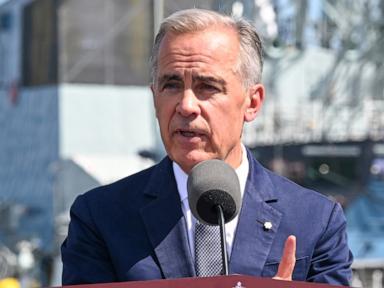
In firing up a trade war with Canada, President Donald Trump turned to a 96-year-old statute so obscure that many trade lawyers didn’t even know it was still on the books
Investors prosper, consumers pay as Iran war exacts uneven economic toll 6 months in
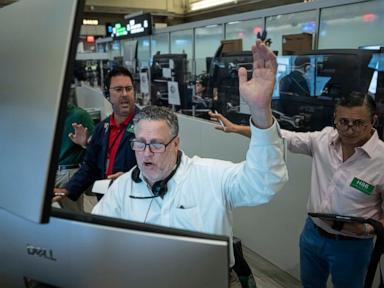
Six months after the U.S. and Israel launched their war against Iran, the direst economic predictions haven't come true


Week ending August 28, 2026 | Market Cap > $10 Billion USD

Week ending August 28, 2026 | based on 14-Day RSI | Market Cap > $10 Billion USD
The Relative Strength Indicator (RSI) can provide a signal that suggests a stock is either overbought or oversold.
📈A stock that has an RSI over 70 is considered to be in “overbought” territory. This might suggest that the stock is due for a pullback, however it is not a recommendation to sell.
📉A stock that is trading with an RSI below 30 is considered to be in “oversold” territory. This might suggest that the stock is due for a recovery, however it is not a recommendation to buy. Always perform your own due diligence.
*Harvest ETFs Disclaimer
This communication should not be considered as advice and/or a recommendation to purchase or sell the mentioned securities or used to engage in personal investment strategies. Tax, investment and all other decisions should be made with guidance from a qualified professional
Commissions, management fees and expenses all may be associated with investing in Harvest Exchange Traded Funds managed by Harvest Portfolios Group Inc. (the “Funds”). Please read the relevant prospectus before investing. The Funds are not guaranteed, their values change frequently, and past performance may not be repeated. Distributions are paid to you in cash unless you request, pursuant to your participation in a distribution reinvestment plan, that they be reinvested into available Class units of the Fund you own. If a Fund earns less than the amounts distributed, the difference is a return of capital.
Certain statements included in this communication constitute forward-looking statements (“FLS”), including, but not limited to, those identified by the expressions “expect”, “intend”, “will” and similar expressions to the extent they relate to the Fund. The FLS are not historical facts but reflect Harvest’s, the Manager of the Fund, current expectations regarding future results or events. These FLS statements are subject to a number of risks and uncertainties that could cause actual results or events to differ materially from current expectations. Although Harvest, the Manager of the Fund, believes that the assumptions inherent in the FLS are reasonable, FLS are not guarantees of future performance and, accordingly, readers are cautioned not to place undue reliance on such statements due to the inherent uncertainty therein. Harvest, the Manager of the Fund, undertakes no obligation to update publicly or otherwise revise any FLS or information whether as a result of new information, future events or other such factors which affect this information, except as required by law.
Reply