

It's Sunday, October 18, 2026. On my radar this week is a little-known bond market gauge called the term premium hit a 12-year high, and it seems as though no one can agree on what it's telling us. Closer to home, CREA cut its 2026 home sales forecast for a third time. At the IMF meetings in Bangkok, Kristalina Georgieva and Anthropic's Jack Clark called for AI guardrails, and Donald Trump waived several Russia sanctions as his feud with Volodymyr Zelensky deepened.

Market Recap: U.S. and Canada
It was opposite week in major markets, with a sharp rotation away from technology. A hotter-than-expected US inflation report on Wednesday pushed bond yields higher and knocked the Nasdaq 100 down hard. Thursday opened with another drop in tech as producer prices also came in hot, before Treasury yields eased and chip stocks clawed back some ground. Friday brought a fresh round of selling in AI and chip stocks that dragged the S&P 500 and Nasdaq 100 to their lows of the week. The Dow held up far better, and the TSX, closed Monday for Thanksgiving, rallied Thursday on stronger commodity prices and held onto its gains.
From a returns perspective, the TSX led the way with a gain of 1.44%, followed by the Dow Jones at 0.67%. In negative territory, the S&P 500 fell 1.95%, and the Nasdaq 100 lagged well behind with a 5.49% decline.
Help Me Choose a New Chart Style!
I’m testing two new chart layouts this week, with the goal of giving you a cleaner, easier way to see how the markets performed at a glance.
I’d love your feedback! Take a look at both versions and let me know which you prefer. The winning style will become a regular feature in future editions of The Pulse.
Version 1

Version 2

I want to hear from you! Which chart style would you prefer to see in future Pulse editions?
Notable Stories This Week
CoreWeave ($CRWV) fell 25% this week as worries about the debt behind the AI buildout came to a head. The stock dropped more than 15% on Wednesday alone as yields on its 2032 bonds climbed to nearly 15%, a level that puts its debt in distressed territory, and S&P rates the company B+. With third quarter interest expense expected between $860 million and $940 million, the market is asking how much leverage the AI infrastructure trade can carry.
In what has to be the best match of the week, Bumble ($BMBL) more than doubled this week after agreeing to be taken private by Ithaca Holdings in a $1.3 billion all-cash deal. Shareholders will receive $6.05 a share, a 138% premium to the October 9 close, and founder Whitney Wolfe Herd will stay on alongside Ithaca's co-CEOs. With Blackstone-affiliated holders and Wolfe Herd already approving by written consent, shareholder sign-off is done, and the stock finished the week just under the offer price.
Celestica ($CLS) fell 17% on the TSX this week as AI hardware names came under pressure. The Toronto-based manufacturer dropped more than 9% on Wednesday alone amid profit-taking and scrutiny of hardware margins, with recent insider selling adding to the unease. Investors get a fresh read when the company reports third quarter results on October 26, followed by an investor day on October 27.
Micron ($MU) fell nearly 15% this week as the memory trade unwound. Chinese chipmaker CXMT said it's made a key advance in a denser memory cell design and plans to launch a server-memory product built on it by the end of 2026, raising longer-term oversupply concerns. Analysts noted the announcement covers conventional DDR5 memory and doesn't touch the high-bandwidth chips at the centre of AI demand, but Sandisk and Western Digital were hit just as hard.
Enerflex ($EFX) jumped 14% on Tuesday after landing a contract to supply more than one gigawatt of natural gas-fired power generation for a large North American data centre. The award lifts its behind-the-meter power backlog above 1.75 gigawatts with deliveries running through 2028, and the company is putting about $100 million into its fabrication capabilities. The stock gave back much of that gain as the week went on, finishing up about 3%.
Major Economic Stories | At a Glance
Gasoline Pushes US Inflation to 3.7%


The inflation rate climbed to 3.7% in September from 3.4% in August, a tenth above forecasts, while the core inflation rate rose to 2.6% from 2.4%, also a tenth hotter than expected. Gasoline prices jumped 9.1% in the month and accounted for more than half of the overall increase.
Monthly change: headline up 0.6%, in line with forecasts, core up 0.3% versus 0.2% expected
Energy: up 20.4% from a year ago, with fuel oil up 74.2%
Airline fares: up 22.4% year over year, including a 1.2% gain in September
Food: flat in September, with grocery prices down 0.1%
Retail Sales Beat, But Gas Did the Heavy Lifting

Retail sales rose 0.8% in September, well ahead of the 0.3% forecast, and August was revised up to 1.3%. Gas stations supplied about $4.1 billion of the $5.7 billion increase, and the control group that feeds into GDP grew just 0.1%, short of the 0.3% expected.
Sales excluding autos: up 0.9% from August
Year over year: up 6.3% from September 2025
Restaurants and bars: up 1.1% in September
Building materials and garden stores: down 0.6% in September
TOP INSIGHTS
The Inflation Problem is Still an Energy Problem, For Now
The gap between headline and core inflation now sits at more than a full percentage point, and that tells me most of September's pressure is coming straight from the pump. Headline inflation looked like it was fading over the summer after peaking in May, so this reacceleration lands at an awkward time. The bigger question is whether the energy shock starts leaking into everything else, or probably more accurately, how much it starts leaking. Core inflation turning back up after three straight months of easing is the first hint that it might.
This is the kind of inflation that stings the most because it's really hard to avoid. You can put off a new couch, a holiday, etc. but you can't skip filling up the car or heating the house. That squeezes discretionary budgets first, which is bad news for retailers and restaurants heading into the holidays, and it leaves the Fed facing a supply shock that higher rates can't fix on their own.
What I'm watching is whether core firms again in October's report, because that would turn a December Fed move into something close to a done deal.
The Retail Sales Beat is Mostly a Price Story
If you strip out the noise, September's retail report says Americans spent more money to buy roughly the same amount of stuff. Sales figures aren't adjusted for inflation, so once you net out September's price increases, real spending barely moved, and the core spending measure likely went backwards.
The problem with that is that consumer spending drives roughly two-thirds of the US economy. When gas eats a bigger share of the paycheque, as I mentioned above, something else gives, and discretionary categories are usually first in line. For investors, it argues for some caution on consumer names that are priced for a strong holiday season.
Here's what I'm watching: third quarter real GDP lands October 29, and I expect it to look solid on paper because nominal spending has been strong. The real risk, though, is Q4, where I think real consumer spending could stall outright if gasoline doesn't come down. That's the scenario where the Fed's inflation fight and a slowing economy collide.
Hot Inflation Has The Bond Market Bracing For Higher rates
The bond market's reaction to Wednesday's report said a lot. The 10-year Treasury yield briefly topped 5.3% before the tech selloff pulled it back to around 5.1% by Friday, and futures markets now put the odds of a December rate hike near 90%.
For our Canadian readers, this spills over quickly. US yields set the tone for Canadian bond yields, and those feed directly into fixed mortgage rates here, so anyone renewing in the next year should plan for borrowing costs to stay high. The flip side is that savers and retirees can lock in yields that give stocks real competition.
This could mean a ceiling on how far stock valuations stretch, especially for the high-growth names that sold off this week. My expectation is that the 10-year stays above 5% through year-end, mainly because the inflation data isn't giving the Fed any room to ease off.
The Week Ahead
Canada's Consumer Price Index for September lands Monday, with economists expecting inflation between 3.0% and 3.2% after August's 3.0%, and it's the last inflation read the Bank of Canada gets before its October 28 decision.
University of Michigan Consumer Sentiment closes the week Friday with its final October reading, after a preliminary 46.3 that showed sentiment sliding again as gas prices bite.
TOP STORY
The Bond Market's 12-Year Warning Sign

The term premium on Treasuries just hit a 12-year high
Investors want extra compensation to lock money up long-term
Rising debt, AI spending and the Iran war add uncertainty
Economists admit the metric is poorly understood and debated
There's a corner of the bond market that hardly ever makes headlines, and right now it's sending a message worth paying attention to. It's called the term premium, and it measures the extra return investors demand for locking money up for ten years instead of rolling over shorter bonds. A widening gap suggests that investors are demanding more compensation for the uncertainty that comes with holding longer-term bonds. As I just noted in the economic update above, hot inflation pushed yields sharply higher this week.
Nerves Can Move Markets Too
One camp says long-term investing really is riskier now, pointing to the IMF's warning on unsustainable government debt and fuel-driven inflation that central banks may have to fight with higher rates. Another says it's mostly nerves, with Macquarie's Thierry Wizman cautioning that a higher premium may simply reflect investors becoming more averse to risk.
Calm Prices Can Hide a Bumpy Road
DeVere Group's Nigel Green warns that when everyone's nervous but prices haven't budged, markets tend to lurch once bad news finally arrives. Capital Economics' Neil Shearing adds some humility, noting the premium is by definition the part of a bond yield that can't be explained, so pinning down its cause is mostly educated guesswork.
Full story here.

Stocks have spent much of the year near record highs, while the bond market's term premium is signaling that long-term investing carries more risk than it has in over a decade. That tension leaves a lot of investors wondering whether to sit tight or make some changes. As a follow-up to last week’s poll question, I'm curious to learn what our community is doing with your portfolios. I look forward to reading your responses.
How are you responding to the current mix of record stock prices and bond market caution?
LAST WEEK’S POLL RESULTS
In last week's poll, I asked whether a 5% bond yield would be enough to get you to move some money out of stocks. It was close, with 54% saying no and 46% saying yes, a sign that plenty of investors are tempted by bonds but still aren't ready to give up on equities. Thanks to everyone who voted.

READER COMMENTS
Not Enough to Switch
“I'm still making north of 10% on covered-call ETFs that have a history of no NAV erosion.” — gertkruger
“5% is still not enough. 7% sounds more reasonable.” — dennisvarcoe
Enough to Shift
“I know your question was directed toward your fellow Canadians, but responding anyway to share a lower neighbor's perspective… Yes, I've been allocating more towards bonds than in years past, but I'm also in my mid-50's which makes the decision a bit easier. With that said, I would not be investing in bonds if rates were very low-single digits as they were a couple years back. I'm using a mix of short-term treasury, total bond & TIPs all thru Schwab & Vanguard ETFs. I know it's likely an unpopular take with many if not most, but the longer bonds stay elevated the more stocks will be pressured IMO. Add in a widening K-shaped economy and I just don't see much on the equity side to get overly excited about right now. The go-go AI stocks could break at the slightest bit of bad news and the old economy names that have already fallen substantially can drop even more IMO. And yet, here I am still sitting in ~77% equities… Happy investing!” — callawayguy
“There is just so much talk about a bad event for the market's future. The better story was saying we have about 3 years before a significant turn down. I just keep saying I'm too old for this.” — bill.geneau
“For a cash wedge, basically. Maturing over two or three years.” — mrrobpog
CANADIAN HOUSING
Canada's Housing Market Takes Another Breather

CREA now expects 2026 home sales to fall 5.2%
September sales fell 7.7% from the same month last year
The national average home price slipped 1.6% to $666,538
CREA still forecasts a 4.4% rebound in sales for 2027
If you were hoping Canada's housing market would find its footing this fall, the latest numbers from the Canadian Real Estate Association aren't encouraging. The industry group has now cut its sales outlook three times this year, after earlier downgrades in April and July. Higher oil prices have pushed up bond yields and fixed mortgage rates, and growing talk that the Bank of Canada may need to raise rates has many would-be buyers staying on the sidelines. Vancouver and Toronto were especially soft in September, and even the Prairies, Quebec and the East Coast are starting to cool.
Uncertainty Is Now the Biggest Hurdle
CREA's Shaun Cathcart described the past two years as a roller-coaster of tariffs and rising lending rates, and he expects many buyers to resist jumping in this fall. Royal LePage's Phil Soper is hearing the same caution, blaming the chaotic tone coming out of Washington for making people wary of big financial decisions.
A 2027 Rebound Rests on the Bank of Canada
CREA's recovery call depends on an optimistic scenario where the Bank of Canada keeps rate changes limited and borrowers get more clarity on lending costs. With new listings also shrinking and Canadian inflation data due Monday, as I touched on above, the next few weeks will show whether that optimism holds or gets revised yet again.
Full story here.
ARTIFICIAL INTELLIGENCE
The IMF Wants Guardrails on the AI Race

The IMF’s Georgieva compared AI to a Formula 1 car needing barriers
Anthropic's Jack Clark backed faster regulation of advanced AI systems
IMF research says about 10% of jobs could be transformed
Tiff Macklem warned AI will create both winners and losers
When the head of the IMF shares a stage with one of AI's most prominent builders, you'd probably expect careful, calculated diplomatic language. Instead, this week's meetings in Bangkok turned into a blunt conversation about how fast the technology is moving and who's responsible for keeping it on the road. Anthropic co-founder and head of policy Jack Clark went further than IMF Managing Director Kristalina Georgieva, saying it feels more like racing at night without brakes, and pointing out that his kids' toys face more regulation than the technology he builds.
The Job Shift Could Be Uneven
Georgieva expects routine, repetitive work to disappear while new service jobs grow out of the investment boom, though she noted those roles don't pay much and could leave young people serving coffee instead of starting professional careers. Macklem drew a parallel to the rise of global trade, which created enormous wealth but cost millions their livelihoods, and said governments need a system to help those left behind or risk a backlash.
Access Will Decide Who Benefits
Georgieva also stressed that AI's gains will only spread widely if people have reliable electricity, digital networks and strong cybersecurity. With protesters marching in Bangkok over inequality during the meetings, the pressure on policymakers to share the upside is only going to grow.
Full story here.
SANCTIONS AND GEOPOLITICS
Trump Waives Russia Sanctions as Kyiv Rift Widens

Trump blocked several Russia sanctions days before they took effect
The law allowed 100% tariffs on top Russian energy buyers
Zelensky said the sanctions could have helped enormously
Russian strikes hit 15 Ukrainian energy facilities overnight
A set of sanctions meant to squeeze Russia's war economy has been gutted before it ever had a chance to have an effect. Congress passed the package and Trump signed it in September, but an executive order Friday night suspended key parts of it in the name of the US national interest. The rollback follows a controversial deal to import Russian diesel aimed at bringing down American fuel prices, the same gasoline costs we saw driving inflation in the economic update above.
Washington and Kyiv Are Drifting Apart
Trump has called Ukrainian leader Volodymyr Zelensky harder to deal with than Vladimir Putin, and Zelensky has pushed back, saying he's only standing up for Ukraine's interests after Kyiv resumed strikes on Russian refineries. Disruptions to Starlink speeds that hampered Ukrainian drone operations have added to fears that the US is tilting toward Moscow.
More Rollbacks Look Likely
Zelensky told reporters he expects the administration to lift even more sanctions, just as Russia targets Ukraine's power grid heading into winter. Negotiators from both countries spoke Friday and could meet next week, which makes that meeting the next real test of whether any pressure on Moscow survives.
Full story here.


Canada on track to become a top-three holder of U.S. government debt, surpassing China

Bank of Canada’s Macklem expects higher inflation outlook as oil prices remain elevated

Toilet paper and secret recorders: What we know about the arrest of the Saudi OpenAI engineer

Watch: Did Tesla really just unveil a flying car?

Prime Minister Mark Carney says US is trying to break Canada as Alberta votes on separation path
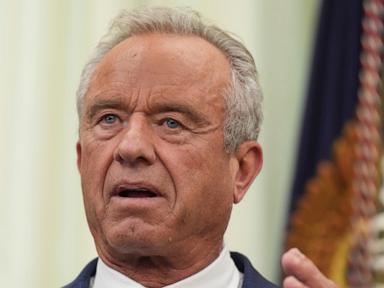
Trump administration advances plan for peptide drugs favored by RFK Jr.

Click any stock ticker to explore its page on Blossom Social. Review key financial data, learn more about the company, explore earnings information, and see what other investors in the community are saying.
Top 10 Weekly Gainers
US and Canadian stocks over $10B market cap, 5-day price change as of October 16, 2026. Prices shown in the currency of the listed exchange (CAD for TSX; USD for NYSE and Nasdaq)
Ticker | Company | Exchange | Price | 5-Day Change |
Bending Spoons S.p.A. | NasdaqGS | $47.07 | +23.8% | |
Fair Isaac Corporation | NYSE | $771.19 | +15.5% | |
TransUnion | NYSE | $74.08 | +13.1% | |
Arxis Inc. | NasdaqGS | $54.10 | +13.0% | |
Loblaw Companies Limited | TSX | $70.06 | +11.8% | |
Cognizant Technology Solutions Corporation | NasdaqGS | $66.03 | +11.5% | |
Equifax Inc. | NYSE | $161.25 | +10.6% | |
Brown & Brown Inc. | NYSE | $69.40 | +10.4% | |
Halozyme Therapeutics Inc. | NasdaqGS | $121.84 | +10.3% | |
Ryan Specialty Holdings Inc. | NYSE | $40.75 | +10.1% |
Top 10 Weekly Losers
Ticker | Company | Exchange | Price | 5-Day Change |
Semtech Corporation | NasdaqGS | $136.73 | -27.0% | |
DigitalOcean Holdings Inc. | NYSE | $98.69 | -26.8% | |
Ciena Corporation | NYSE | $332.73 | -26.0% | |
Coherent Corp. | NYSE | $232.90 | -25.5% | |
Lumentum Holdings Inc. | NasdaqGS | $824.13 | -25.3% | |
Fabrinet | NYSE | $363.51 | -25.2% | |
CoreWeave Inc. | NasdaqGS | $61.39 | -25.2% | |
Nebius Group N.V. | NasdaqGS | $165.47 | -25.1% | |
Onto Innovation Inc. | NYSE | $220.70 | -25.1% | |
Hewlett Packard Enterprise Company | NYSE | $55.13 | -24.9% |
Most Overbought
US and Canadian stocks, Relative Strength Index as of October 16, 2026
Ticker | Company | Exchange | Sector | RSI |
Dollarama Inc. | TSX | Consumer Discretionary | 81.0 | |
Loblaw Companies Limited | TSX | Consumer Staples | 79.7 | |
PTC Inc. | NasdaqGS | Information Technology | 78.8 | |
Church & Dwight Co. Inc. | NYSE | Consumer Staples | 77.6 | |
Paylocity Holding Corporation | NasdaqGS | Industrials | 77.0 | |
W. R. Berkley Corporation | NYSE | Financials | 76.5 | |
Altria Group Inc. | NYSE | Consumer Staples | 76.2 | |
Suncor Energy Inc. | TSX | Energy | 76.2 | |
McKesson Corporation | NYSE | Health Care | 75.7 | |
Marriott International Inc. | NasdaqGS | Consumer Discretionary | 75.7 |
Most Oversold
Ticker | Company | Exchange | Sector | RSI |
MGM Resorts International | NYSE | Consumer Discretionary | 17.6 | |
IREN Limited | NasdaqGS | Information Technology | 22.2 | |
Rivian Automotive Inc. | NasdaqGS | Consumer Discretionary | 23.1 | |
State Street Corporation | NYSE | Financials | 23.2 | |
Bank of America Corporation | NYSE | Financials | 24.0 | |
Arrowhead Pharmaceuticals Inc. | NasdaqGS | Health Care | 24.2 | |
Madrigal Pharmaceuticals Inc. | NasdaqGS | Health Care | 24.7 | |
Morgan Stanley | NYSE | Financials | 25.4 | |
Annaly Capital Management Inc. | NYSE | Real Estate | 26.2 | |
Albemarle Corporation | NYSE | Materials | 26.4 |
The Relative Strength Index (RSI) can provide a signal that suggests a stock is either overbought or oversold.
📈A stock that has an RSI over 70 is considered to be in “overbought” territory. This might suggest that the stock is due for a pullback, however it is not a recommendation to sell.
📉A stock that is trading with an RSI below 30 is considered to be in “oversold” territory. This might suggest that the stock is due for a recovery, however it is not a recommendation to buy. Always perform your own due diligence.
