

It's Sunday, November 1, 2026. There certainly was no shortage of drama this week. First off, hackers stole more than $6 billion from Binance. Then, the tech sector had a major sell-off, and the Bank of Canada raised rates for the first time in three years. Also, Donald Trump is running into the same affordability gap that hung over Joe Biden’s head, and Gen Z is trading bars for run clubs.
And, it was an especially busy week for economic releases, so we’ve got lots to cover. Let’s get started.

Market Recap
Given the way Friday’s trading session ended, it’s easy to forget that the markets started the week on solid footing, with all four major indices climbing through Wednesday and the Nasdaq 100 leading the way. That changed quickly once big tech earnings landed. Alphabet's spending-heavy quarter set off a tech sell-off on Thursday, and things got even worse on Friday as Intel's weak outlook and Amazon's results dragged chip and tech names lower into month-end. The TSX held up better than its US peers but still slipped late in the week as metals prices weakened.
As for the numbers, every index finished the week in the red. The TSX was the most resilient at -0.47%, followed by the S&P 500 at -0.57% and the Dow Jones at -0.85%, while the tech-heavy Nasdaq 100 fell 1.98%.

Stocks in the Spotlight
Intel ($INTC) fell 24% this week after guiding fourth-quarter revenue to $15 billion to $16 billion, well short of the roughly $17.1 billion analysts expected. Friday's 29% drop was the stock's worst day since 1974, even though its data centre and AI business grew 78% last quarter.
Allied Properties REIT ($AP.UN) lost 28% after cutting its monthly distribution by 90%, from six cents to 0.6 cents a unit. The Toronto office landlord is redirecting about $126 million a year to debt repayment after third-quarter funds from operations fell about 43%.
Bausch Health ($BHC) gained 27% after beating expectations and raising its full-year guidance, with adjusted earnings per share up 53%. Excluding Bausch + Lomb, quarterly adjusted EBITDA topped US$1 billion for the first time, and net debt fell by more than US$500 million.
Alphabet ($GOOGL) dropped 13%, nearly all on Thursday, as a record quarter came with record spending. Google Cloud revenue roughly doubled, but capital spending hit $51.4 billion and pushed free cash flow negative, with even more spending planned for 2027.
Eli Lilly ($LLY) rose 11% after revenue grew 39% to $24.4 billion on demand for Mounjaro and Zepbound. Lilly raised the midpoint of its 2026 revenue guidance by $5.5 billion, a single upgrade bigger than many drug companies' annual sales.
Economic Vital Signs
THE QUICK READ
Borrowing got more expensive this week, and prices are still rising faster than central banks want.
Durable goods (big-ticket orders like planes and machinery): orders rose, mostly from airplanes, but businesses kept buying equipment too.
Bank of Canada rate decision: rates went up for the first time in three years, so variable-rate mortgages and lines of credit cost a bit more.
Fed rate decision (the US central bank): rates held steady, but two officials wanted a hike and December is in play.
Core PCE (the inflation measure the Fed watches most): prices rose a little faster in September.
Income and spending: Americans' spending grew faster than their income, pulling the saving rate down to 3.8%.
THE FULL DETAILS
Aircraft Lifts Durable Goods While Business Spending Stays Firm

New orders for durable goods rose 1.8% in September, up from an upwardly revised 0.1% gain in August and close to what economists were expecting. Transportation did much of the lifting with civilian aircraft orders up 28.4%, but the underlying trend in business equipment held up too, with core capital goods shipments rising 1.2%.
Excluding transportation: +0.5%, a second straight monthly gain after August's 0.3%
Core capital goods orders: +0.5%, following a 1.6% jump in August
Excluding defence: +2.2%, showing civilian demand drove the gain
Year over year: total orders up 9.9%, with unfilled orders up 9.0%
Bank of Canada Hikes for the First Time Since 2023

The Bank of Canada raised its policy rate by a quarter point to 2.5% on Wednesday, its first increase since July 2023 after seven straight holds at 2.25%. Governor Tiff Macklem said there could be a need to raise rates further but that the Bank will proceed carefully, as persistently high energy prices push inflation toward roughly 3.5% by year-end.
Bank Rate and deposit rate: 2.75% and 2.45%
Inflation outlook: CPI averaging 3% in 2027 before returning to about 2% by mid-2028
Growth: Q2 GDP up 3.3% annualized, Q3 tracking near 2%, with a fourth-quarter slowdown expected from new US tariffs
Market reaction: the move was almost fully priced in, per Desjardins, with the upward inflation revision the bigger surprise
Fed Holds, but Two Officials Wanted Another Hike

The Federal Reserve held its federal funds target range at 3.75% to 4.00% on Wednesday, pausing after September's quarter-point hike, its first increase since 2023. The 10-2 vote showed a divided committee, with Governor Lisa Cook and Cleveland Fed President Beth Hammack dissenting in favour of another quarter-point increase.
Statement language: economic activity upgraded to "strong" from "solid," with inflation still described as elevated
December odds: markets priced roughly an 85% chance of a quarter-point hike on December 9, little changed from before the decision
Treasury yields: the 10-year rose about 5 basis points to roughly 5.04%, while the 2-year eased by the afternoon
Next up: October minutes around November 18, then new projections with the December decision
The Fed's Preferred Inflation Gauge Moves the Wrong Way

The core PCE price index rose 0.3% in September, lifting the annual rate to 3.1% from 3.0% in August, in line with forecasts. August's monthly gain was also revised up to 0.3% from 0.2%, giving the Fed two straight months of firmer underlying inflation heading into its December decision.
Headline PCE: 3.6% year over year, up from 3.4% in August and the fastest pace since May
Headline monthly: +0.5%, matching the consensus
Trend: core PCE has run at or above 3.0% every month since March
Nowcast check: the Cleveland Fed had pencilled in 0.28% for core, so there was little surprise for markets
Spending Outruns Income as Savings Thin Out


Personal income rose 0.2% in September while personal spending climbed 0.5%, the second straight month households spent faster than they earned. After adjusting for inflation, spending was flat and disposable income fell 0.3%, meaning higher prices absorbed the entire gain in dollars spent.
Saving rate: 3.8%, down from 4.0% in August and the lowest since late 2022
Disposable income: +0.2% in dollar terms, and up just 1.0% from a year ago after inflation
Spending in dollars: up $113.1 billion in the month
Income growth: +4.1% from a year ago, only half a point ahead of headline inflation
TOP INSIGHTS
The Bank of Canada Is Hiking Into a Softer Economy Than the Fed
Both central banks took a hawkish stance this week, but for very different reasons. At the Fed, two policymakers wanted to keep hiking, and we have to interpret that as a sign that the US economy is running hot enough to keep pressure on prices by itself. In Canada, unemployment has sat near 6.5% for months now and inflation excluding gasoline was just 2.2% in September. The Bank of Canada is hiking to keep an oil shock from seeping into wages and expectations, in an economy that's already carrying slack.
Based on what we know today, I expect the Bank of Canada to deliver at least one more rate hike, with further increases still possible. Next Friday's jobs report should be instructive. The Fed, on the other hand, looks set to keep going.
American Households Are Paying for Today by Saving Less
At the risk of sounding like a broken record, I’ll say it again: September's income and spending numbers showed consumers holding up again. Dollar spending keeps growing, but real spending has stalled, and the gap is being filled by a falling savings rate. Higher energy costs are taking a bigger bite out of paycheques, but it looks like households are determined to keep up with their normal routines, rather than cut back.
In practical terms, many families are covering groceries, gas and maybe the occasional dinner out by putting less away each month. With the household saving rate now below 4% of after-tax income, there’s very little room to absorb a layoff or an unexpected repair bill. For companies, it means sales that look healthy in dollar terms but aren't translating into more units sold, and that hits margins when input costs are also rising.
With the current odds of the Fed hiking again in December, we’re not going to see any relief in borrowing costs. We can learn by watching what happens with the saving rate; a turn higher would tell me households are finally pulling back in earnest.
Business Investment Is Carrying More of the Load
Businesses are still spending. Orders for core capital goods have been rising, and shipments behind those orders accelerated through the third quarter, supported by AI-related investment that even the Bank of Canada flagged in its statement this week. That's a different growth engine from the consumer, and one that's less sensitive to interest rates in the short run because it's driven by buildout plans that unfold over multiple years.
For workers, this appears to be a sliver of good news. This kind of spending supports jobs in manufacturing, construction and utilities. It also helps explain why the Fed describes the economy as strong even though households say otherwise: the growth is real, but it's concentrated in places most families don't see day to day. That split makes policy harder, since rate hikes are felt in household budgets long before they slow a data centre project.
We can watch whether the biggest spenders start trimming budgets, and durable goods orders will be the first place it shows up. What we don’t want to see is the economy losing a key support just as consumers are running low on savings.
THE WEEK AHEAD
JOLTS Job Openings for September arrive Tuesday, with August's 7.1 million openings the bar to watch for signs that hiring demand is cooling further.
US Non Farm Payrolls for October are expected to show about 55,000 jobs added on Friday, with the Unemployment Rate forecast to hold at 4.2%, a modest pace that would keep the Fed focused squarely on inflation.
Michigan Consumer Sentiment releases its preliminary November reading Friday after October's 48.0, and it'll show whether higher gas prices and a sliding stock market are weighing further on household mood.
Canada's Unemployment Rate and Participation Rate for October also land Friday, and after September's 68,000 job loss left unemployment at 6.5%, another weak print would make a second Bank of Canada hike much harder to justify.
TOP STORY | CRYPTO
Binance Hack Exposes Crypto's Weakest Link

Hackers took over $6 billion from Binance in 20 minutes
Binance's losses could top $3 billion after stablecoin freezes
Losses far exceed Binance's $1 billion emergency fund
Polymarket users lost $2.7 million in a separate breach
The world's largest crypto exchange just suffered a record-breaking heist, and the thieves made quick work of it. More than $6 billion was stolen and roughly half of the stolen funds were stablecoins that their issuers were able to freeze. The rest, though, was in bitcoin and ether, which have no central authority to claw them back. Binance suspended deposits and withdrawals and says it'll cover customer losses from its reserves and other assets.
Deep Pockets Don't Guarantee Security
Ryan Kirkley of Global Settlement Network called it a serious problem when the biggest exchange relies on emergency freezes and reimbursement promises while courting institutional money. Chainalysis also flagged new laundering patterns, with thousands of automated transactions hiding the trail.
Expect Investors to Rethink Where They Hold Crypto
Iman Shafiei of Keystone Research Group recommends moving any crypto you plan to hold off the exchange and into a self-custody wallet. That has its own trade-off, since a lost recovery phrase can mean lost funds, and Chainalysis estimated in 2021 that about 20% of all bitcoin may already be stranded.
Full story here.

THIS WEEK’S POLL
As you just read, Binance has promised to make customers whole, but the hack raises a bigger question about who's actually responsible for keeping crypto investors safe. Banks come with deposit insurance and strict oversight, but crypto exchanges largely operate outside that framework, which leaves much of the risk with the people holding the coins. If you invest in crypto (or even if you don’t), where do you weigh in with consumer protection in this space? Please vote on this week's question:
Who should be responsible for protecting crypto investors?
LAST WEEK’S POLL RESULTS
In last week's poll, I asked what matters more to you in the debate over Bill C-22: giving police and CSIS the tools they need to investigate crime, or protecting the privacy of everyday users. Privacy won out with 63% of the vote compared to 37% who sided with giving investigators the tools they need. Thanks to everyone who voted.

READER COMMENTS
Protect User Privacy
“Isn't this the root of our decline? Government overreach and control in all areas... one inch at a time... kind of discreet and painless that way. We are all better when 'Big Brother' can watch over and protect us within the framework of their mandated values.” — iacobellir
“I'm unhappy with how Google and Meta (among others) own our data and can share it willy-nilly with the US government. I don't think Canada should be going down this road. Having said that, if the police need a warrant to search a property, then I have no issue if they also search computers and accounts. There is a fine line between protecting the community and protecting individual rights.” — syoungconsultinginc
Equip Police and CSIS
“One thing that is often misunderstood is that police and CSIS still need judicial authorization to access this information. They can't go on a hunting expedition on suspicion alone. I don't understand why those companies would not want to aid the safety and security of our communities instead of providing a means to facilitate criminal activities without taking some responsibility. This is not unreasonable in my view. For those who argue that it might be abused, there are the safeguards of our courts to deal with any abuse. It is more likely that there won't be, because these companies would only be acting on judicial orders. Everyday users' privacy would be protected.” — rcbent
CANADIAN HOUSING
Rate Hike Hits a Struggling Housing Market

Bank of Canada raised its policy rate to 2.5%
Canada's big five banks lifted prime rates to 4.70%
Hike adds about $70 monthly on a $500,000 mortgage
CREA has cut its 2026 home sales forecast three times
Canadian borrowers just got their first rate increase in three years, and many variable-rate mortgage holders will feel it right away. As I noted in the economic update above, high fuel costs pushed the Bank to act, and Governor Tiff Macklem left the door open to more. Macklem acknowledged it won't feel good right away, but said that's how inflation comes back down.
Locking In Is Starting to Look Worth the Premium
Toronto condo owner Barbara Best recently locked in a fixed rate months ahead of renewal, deciding to accept a higher payment in exchange for peace of mind. Broker Marcus Tzaferis says now is the time to shop around, and to start the renewal process early.
Don't Expect a Housing Rebound Until Rates Fall
Senior deputy governor Carolyn Rogers called the Bank's housing outlook subdued, with Ontario and British Columbia under the most pressure as fewer buyers qualify. Ownright COO Joel Fox expects housing activity to keep declining year over year into next year, though the market's already so weak it's hard to see it falling much further.
Full story here.
CONSUMER TRENDS
Gen Z Is Trading Barstools for Barbells

Diplo's Queens race drew about 12,000 paying runners
Volo Sports expects 950,000 registrations this year, up 34%
27% of registered NYC Marathon runners are twenty-somethings
Gen Z and millennial fitness spending is outpacing bar spending
Young adults have found a new way to make friends, and these days, it often starts with an early-morning run. Younger Americans are signing up for recreational leagues, run clubs and endurance races in growing numbers. Organizers are buying in, from DJ Diplo's post-race dance parties to Hyrox pairing singles for blind dates through a dating app. Some on social media even joke that distance running is the new quarter-life crisis.
Community Is the Real Product
Volo has drawn private-equity money, though founder Giovanni Marcantoni says about three-quarters of its growth has been organic. Run club founder Brody Short says it goes deeper than the running, and that she started her club to find real friends.
Not Every Fitness Brand Will Ride This Wave
Gyms like Life Time and studios such as Solidcore have expanded on young demand, while SoulCycle has closed studios and Xponential has shed weaker brands. Bars haven’t disappeared though, and still play a role, with Volo offering post-game deals and Diplo's festival selling drinks. The winners might end up being the businesses selling the community around the workout.
Full story here.
US ECONOMY
Trump Can’t Escape Biden's Affordability Problem

US unemployment is 4.2%, and third-quarter growth hit 3.4%
Wages rose 3% over the year while prices rose 3.7%
New York Fed: tariffs added 2.9 points to goods inflation
Trump floated $5,000 payments if Republicans keep Congress
Donald Trump is running into the same wall Joe Biden hit in 2024: the economic data looks decent, but voters don't feel it. Growth is holding up and stocks have hovered near record highs, and yet (not withstanding this week’s selloff) prices remain high heading into Tuesday's midterms. As we just saw in the all-important PCE numbers above, inflation picked up again in September, with energy costs tied to the Iran conflict a big part of the reason.
Voters Judge the Economy at the Checkout
Democratic pollster Celinda Lake says economists hear falling inflation as slower increases, while voters expect prices to return to where they were. That practically never happens, and as Lake puts it, “You can't argue with people about their own lived reality.” Everyone interprets the conditions according to how they’re personally affected.
Trump Owns This Inflation More Than Biden Did
Economist Peter Morici, who aligns with Republicans, traces today's inflation directly to tariffs and the war, and he says that leaves Trump less room than Biden had to blame outside forces. Proposals like a credit card rate cap and cash payments show the White House knows it, but perceptions may matter more than the facts on election day.
Full story here.


Carney has racked up an impressive list of projects and deals. His budget has to answer for them

MOU talks with governments could run past deadline, Imperial Oil CEO says

Google value plunges by $500bn as its own AI search hits ad sales

What we know about Binance's $6.3bn hack
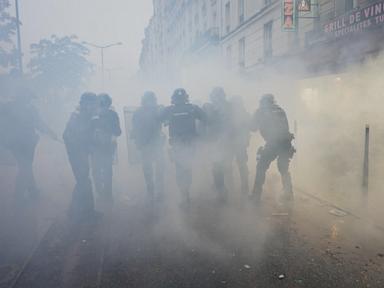
Hundreds of thousands of young protesters take to the streets across France

Senate is skeptical about making daylight saving time permanent despite Trump's pressure

Click any stock ticker to explore its page on Blossom Social. Review key financial data, learn more about the company, explore earnings information, and see what other investors in the community are saying.
Top 10 Weekly Gainers
US and Canadian stocks over $10B market cap, 5-day price change as of October 30, 2026. Prices shown in the currency of the listed exchange (CAD for TSX; USD for NYSE and Nasdaq)
Ticker | Company | Exchange | Price | 5-Day Change |
Glaukos Corporation | NYSE | $237.60 | +32.8% | |
Viasat Inc. | NasdaqGS | $77.02 | +25.3% | |
FTAI Aviation Ltd. | NasdaqGS | $187.27 | +21.3% | |
Insmed Incorporated | NasdaqGS | $112.58 | +20.5% | |
Range Resources Corporation | NYSE | $54.63 | +20.0% | |
Pentair plc | NYSE | $66.26 | +19.8% | |
Jones Lang LaSalle Incorporated | NYSE | $359.79 | +19.8% | |
Vertiv Holdings Co | NYSE | $232.50 | +19.7% | |
Carvana Co. | NYSE | $68.29 | +18.1% | |
Gen Digital Inc. | NasdaqGS | $29.13 | +17.1% |
Top 10 Weekly Losers
Ticker | Company | Exchange | Price | 5-Day Change |
Reddit Inc. | NYSE | $91.73 | -36.4% | |
ServiceNow Inc. | NYSE | $105.12 | -33.9% | |
Alnylam Pharmaceuticals Inc. | NasdaqGS | $165.00 | -26.4% | |
F5 Inc. | NasdaqGS | $338.34 | -25.7% | |
Fortinet Inc. | NasdaqGS | $136.08 | -24.4% | |
Intel Corporation | NasdaqGS | $65.76 | -24.4% | |
Nu Holdings Ltd. | NYSE | $11.61 | -23.4% | |
Twilio Inc. | NYSE | $205.03 | -21.7% | |
Roblox Corporation | NYSE | $42.99 | -18.7% | |
Atlassian Corporation | NasdaqGS | $191.72 | -15.8% |
Most Overbought
US and Canadian stocks, Relative Strength Index as of October 30, 2026
Ticker | Company | Exchange | Sector | RSI |
ADT Inc. | NYSE | Consumer Discretionary | 88.3 | |
Hasbro Inc. | NasdaqGS | Consumer Discretionary | 86.6 | |
Glaukos Corporation | NYSE | Health Care | 82.6 | |
Pentair plc | NYSE | Industrials | 82.5 | |
Roper Technologies Inc. | NasdaqGS | Information Technology | 82.2 | |
Exelixis Inc. | NasdaqGS | Health Care | 81.7 | |
Allegion plc | NYSE | Industrials | 81.6 | |
Veralto Corporation | NYSE | Industrials | 80.5 | |
Booz Allen Hamilton Holding Corporation | NYSE | Industrials | 79.6 | |
Cheniere Energy Inc. | NYSE | Energy | 79.4 |
Most Oversold
Ticker | Company | Exchange | Sector | RSI |
Reddit Inc. | NYSE | Communication Services | 17.4 | |
NewMarket Corporation | NYSE | Materials | 18.9 | |
TFI International Inc. | TSX | Industrials | 19.5 | |
Alphabet Inc. | NasdaqGS | Communication Services | 21.4 | |
Alnylam Pharmaceuticals Inc. | NasdaqGS | Health Care | 22.1 | |
Carpenter Technology Corporation | NYSE | Industrials | 22.6 | |
F5 Inc. | NasdaqGS | Information Technology | 23.1 | |
Sea Limited | NYSE | Consumer Discretionary | 23.1 | |
Caterpillar Inc. | NYSE | Industrials | 23.6 | |
MSG Knickerbockers Corp. | NYSE | Communication Services | 24.4 |
The Relative Strength Index (RSI) can provide a signal that suggests a stock is either overbought or oversold.
📈A stock that has an RSI over 70 is considered to be in “overbought” territory. This might suggest that the stock is due for a pullback, however it is not a recommendation to sell.
📉A stock that is trading with an RSI below 30 is considered to be in “oversold” territory. This might suggest that the stock is due for a recovery, however it is not a recommendation to buy. Always perform your own due diligence.

