

It's Saturday, November 21, 2026, and wow, what a week is was. Anthropic's blockbuster IPO couldn't stop a tech sell-off that erased the Nasdaq's gains for the year. Meanwhile, GTA VI outsold a Taylor Swift tour and an Avengers movie on its first day, a BC court found a real estate executive in contempt over $44 million moved on sticky notes, Canada's retail sales were disappointing, and Airbnb hosts can no longer ask guests to do the dishes. Let's get into it.

Market Recap
I’m going to call it a shellacking; an absolutely brutal week for the markets, with the Dow posting its worst week since March 2020. Yes, we all remember that month. Stocks slid on Monday as the fallout from Jensen Huang's exit kept pressure on AI names, and Nvidia's strong results on Tuesday night bought only a brief pause. Anthropic's debut sparked an early rally Thursday that faded within hours, and Friday turned into a flat-out rout after Reuters reported an SEC probe into Nvidia's accounting.
From a returns perspective, the Dow Jones held up best but still suffered an 8.02% loss, followed closely by the TSX at 8.08% and the S&P 500 at 8.61%. The Nasdaq 100 took the hardest hit, falling 10.43%.

Stocks in the Spotlight
Nvidia ($NVDA) fell 22.9% this week, even after third quarter revenue more than doubled to US$115.8 billion and topped estimates by about US$7 billion. In its first report since Jensen Huang's resignation, management guided to roughly US$130 billion for the current quarter without counting any data centre sales to China.
CoreWeave ($CRWV) fell 25.6% this week and closed Friday at US$39.51, just below the US$40 price of its March 2025 IPO. Investors are zeroing in on its debt, with management guiding fourth quarter interest expense to between US$1.05 billion and US$1.15 billion as it funds up to US$39 billion in capital spending this year.
Advantage Energy ($AAV) jumped 23.9% this week after Canadian Natural Resources agreed to buy it for $13.55 a share in cash, a 25% premium to the prior Friday's close. The $2.53 billion deal, including debt, adds about 79,000 barrels of oil equivalent a day right next to Canadian Natural's Grande Prairie operations.
Palo Alto Networks ($PANW) gained 6.5% this week, one of the few tech names in the green, after fiscal first quarter revenue grew about 39% to US$3.45 billion and beat estimates. It also agreed to buy AI model platform Applied Compute in a US$4.5 billion all-stock deal and raised its fiscal 2027 revenue guidance.
Target ($TGT) rose 2.7% this week after third quarter comparable sales grew 5.6% on a 5% increase in customer traffic, its best quarterly sales growth in five years. Earnings of US$2.65 a share included a US$0.50 boost from tariff refunds, and management said November sales are running ahead of October's pace.
Economic Vital Signs
THE QUICK READ
Consumers on both sides of the border are holding up better than the stock market, even as energy prices are keeping inflation elevated.
Canada Inflation Rate and Core Inflation Rate (how fast prices are rising, overall and with the biggest swings stripped out): prices rose 3.1% from a year earlier, while the Bank of Canada's preferred core measures sat at 1.8% and 2.0%.
US Retail Sales (how much Americans spent at stores and restaurants): sales rose 0.2% in October, in line with forecasts.
Michigan Consumer Sentiment (how confident Americans feel about the economy): sentiment rose to 51.5, its highest level since August.
THE FULL DETAILS
Gas Keeps Canada's Inflation at 3.1% as Core Pressures Cool


Canada's inflation rate held at 3.1% in October, matching September, as higher prices for gasoline, groceries and clothing offset cheaper cell phone plans and slower rent growth. The Bank of Canada's preferred core inflation measures were very encouraging, with CPI-trim easing to 1.8% against a 1.9% forecast and CPI-median holding at 2.0%.
Gasoline: up 30.9% from a year earlier, though down 2.5% from September
Clothing: up 3.4% on the month, the largest monthly gain since September 2019
Groceries: up 2.0% from a year earlier, picking up after four months of slower growth
CPI excluding energy: 2.0%, down from 2.1% in September
US Shoppers Pull Back on Cars and Keep Spending Elsewhere

Retail sales rose 0.2% in October, in line with forecasts and a slowdown from September's unrevised 0.8% gain. A 1.6% drop at auto dealers held back the headline, while the control group that feeds into GDP rose a stronger-than-expected 0.6%.
Sales excluding autos: up 0.6%, ahead of the 0.4% forecast
Year over year: up 6.8% from October 2025, a figure that isn't adjusted for inflation
Total sales: US$748.2 billion for the month
Margin of error: Census says the monthly gain isn't statistically different from zero
Midterm Results Lift Consumer Sentiment to a Three-Month High

The University of Michigan's consumer sentiment index rose to 51.5 in its final November reading, up from 48.0 in October and the preliminary 51.0, just shy of the 51.6 consensus. The gain came from brighter expectations after the midterms, while the current conditions gauge was revised lower and households with the largest stock holdings reported weaker personal finances.
Year-ahead inflation expectations: 3.7%, down from 4.7% in October
Long-run inflation expectations: 3.3%, down from 3.5%
Expectations index: 52.9, the highest since July
Versus February: still about 9% below that month's level
TOP INSIGHTS
Shoppers Haven't Cracked Yet
In last week’s Pulse, I suggested that weaker retail sales would be a sign that stagnant inflation-adjusted wages were starting to put pressure on household spending. But that’s not what the latest numbers showed. Overall retail sales came in as expected, while the closely watched control group was stronger than forecast. That tells me that consumers continue to hang in their better than I anticipated, at least for now.
One line item of note is that Americans pulled back on cars, a purchase that usually needs financing at today's rates, and kept spending on almost everything else.
That's the kind of resilience that gives the Fed cover to tighten again. CME's FedWatch tool put the odds of a quarter-point hike on December 9 above 90% as of Friday, up from 89.7% a week earlier.
It looks like higher rates are hitting big-ticket purchases first, and that's the pressure point I'm watching through the holidays.
Canada's Inflation Is Now Mostly an Energy Story
The gap between Canada's headline and core inflation keeps widening. Strip out energy and prices are rising right around the Bank of Canada's 2% target, so most of the overshoot comes from the pump and from base-year effects that'll fade on their own. The one caution is CPI-common, which edged up to 2.5%.
That leaves the Bank in an awkward spot after October's quarter-point hike to 2.50%, its first increase since 2023. Higher rates do little to bring down gasoline prices.
It now looks more likely that the Bank holds on December 9 and waits to see whether November's drop in gas prices pulls the headline number down by itself.
Wealthy Households Are the Weak Spot to Watch
In an improving trend that can invoke a warm and fuzzy feeling, US Consumer Sentiment improved this month for low and middle-wealth households thanks to cheaper gas, but those with the largest stock holdings said their finances got worse. That split showed up before the rout we saw Friday, and those same households do a large share of US spending.
One thing that will be interesting to see if what will happen if this week’s stock slide drags on. The wealth effect that's carried consumer spending could start working in reverse at the same time as the Fed tightens.
The Fed does get a bit of relief from the sharp drop in inflation expectations, which weakens the case for a half-point move, which some are calling for. It looks more likely the Fed sticks to a quarter point in December, and I'll be watching next month's survey for signs that falling stock prices are reaching the households doing the most spending.
THE WEEK AHEAD
Durable Goods Orders for October are due Wednesday, with economists expecting no change after September's 1.8% gain, a read on whether businesses are still committing to big equipment purchases as borrowing costs climb.
Core PCE Price Index for October also lands Wednesday, with a 0.3% monthly rise expected that would lift the yearly rate to 3.2% from 3.1%, making it the last major inflation reading the Fed gets before its December 9 decision.
Personal Income and Personal Spending round out Wednesday's releases after gains of 0.2% and 0.5% in September, and they'll show whether households are leaning harder on savings to keep spending.
IN PARTNERSHIP WITH HARVEST ETFS
ANTE | Own Anthropic with Enhanced Monthly Income

Anthropic just made history with one of the largest initial public offerings (IPO) ever!
It began trading on the NASDAQ under the ticker ANT on Thursday, November 19. Anthropic is one of the most ambitious companies on the planet, specializing in the development of advanced artificial intelligence (AI) systems, including the Claude family of models, with a focus on safety and reliability.
Investors can now get exposure to Anthropic at a lower price, and with monthly income, through the Harvest Anthropic Enhanced High Income Shares ETF (TSX: ANTE).
ANTE provides access to the growth of Anthropic and is overlaid with an active covered call writing strategy on up to 50% of the portfolio. It applies modest leverage of around 25% to enhance its yield and growth potential.
Why ANTE?
US Stock + Canadian Trust Unit
Enhanced Monthly Income + Tax Efficient
Lower Purchase Price
*See Harvest ETFs Disclaimer at the end of the newsletter
TOP STORY | MARKETS
Anthropic's IPO Couldn't Rescue the AI Trade

The Nasdaq fell 5.28% Friday, wiping out its 2026 gains
The S&P 500's seven-day losing streak is its longest since 2020
Anthropic shares dropped 8.5% Friday to close at US$88.91
Nvidia has lost 47.5% and US$2.7 trillion since October 6
The sell-off in technology stocks turned into more of a running of the bulls this week, and even the biggest IPO on record couldn't slow it down. Investors have spent weeks pulling money out of the AI trade, and with Anthropic's IPO behind them, those worries wasted no time coming back to the surface. The concerns range from how newly elected Democratic governors might slow the data centre buildout to Nvidia's future after Jensen Huang's resignation. Money fled toward safer corners of the market instead, and US Treasuries rallied sharply on Friday.
The Fear Gauge Is Flashing Red
The VIX made a huge move this week, jumping 86% to close at 35.89, its highest level in 19 months. Investors are also demanding proof that the hundreds of billions being spent on AI will pay off, and Reuters reported Friday that the SEC is probing Nvidia's accounting practices.
Cheaper Tech Could Tempt Bargain Hunters
Tech valuations entered Friday at their lowest forward earnings multiple since March 2020, and Nvidia's is the lowest since 2002. JPMorgan's David Kelly called the slide "a mild cold" that should pass in a week or two, but CFRA's Arun Sundaram said traders are selling first and worrying about fundamentals later. Bust out the popcorn and settle in, because this will be an interesting ride for the next few weeks.
Full story here.

THIS WEEK’S POLL
As we hear over and over, corrections are part of investing, and this one has moved quickly, taking the Nasdaq from a record high to a loss for the year in about six weeks. Some strategists think the worst could pass in a week or two, while others see a longer reset as investors rethink what they're paying for AI. I know we’ll see a divergence of opinions here in the Pulse community, so please weigh in with your thoughts and vote on this week's question:
How long do you expect this correction to last?
LAST WEEK’S POLL RESULTS
In last week's poll, I asked what the biggest risk is for Nvidia shareholders, and 52% pointed to the leadership gap, while damage to its reputation and tighter export controls on China split the rest at 24% each. With interim leadership in place and an SEC probe now in the headlines, it'll be interesting to see whether that balance shifts. Thanks to everyone who voted.

READER COMMENTS
Export Controls on China
"While 'the leadership gap' is getting the most attention, that'll be taken care of in due time. Reputational damage is no joke, but again, that too shall pass, assuming of course there's not a mass exodus of key employees due to loss of pride in where they work. Tighter export controls 'could be' the biggest deal IMO, so that's what I chose. There are reports suggesting China-linked data centre chip demand potentially falls somewhere between 20% and 40% of Nvidia's total revenue. Tighter controls on sales to Singapore and Malaysia, which are suspected of renting capacity to Chinese firms, 'could be' a huge hit to Nvidia's growth. BIG risk IMO." — callawayguy
GAMING
GTA VI Outearns Taylor Swift and the Avengers

First-day GTA VI sales hit US$3.79 billion, per Take-Two
Pre-launch revenue reached US$2.36 billion before the November 19 release
Over 80% of preorder buyers chose the US$100 Ultimate Edition
Fans streamed more than 132 million hours on launch day
Thirteen years after the last instalment, Rockstar's new Grand Theft Auto finally arrived this week, and gamers clearly didn't lose interest while they waited. The opening-day haul topped what Avengers: Endgame earned over its entire box office run and what Taylor Swift's Eras Tour brought in. Set in Vice City, a fictional version of Miami, the game follows Jason and Lucia as they're pulled into a criminal conspiracy. Its realism, right down to bird watching and hanging drywall, is a big part of the appeal.
GTA Now Sits Alongside James Bond and Star Wars
Bank of America analyst Omar Dessouky says the launch turns GTA into a multigenerational franchise on par with James Bond, Star Wars and Mickey Mouse. Take-Two sold 32.5 million preorder copies after opening orders in June.
Holiday Gaming Spend Has One Clear Winner
With Nintendo's Ocarina of Time remake the only other major fall release, GTA VI should drive a big share of holiday video game spending. Dessouky expects the more mature storytelling to pull back lapsed gamers, including people who haven't owned a console in over a decade.
Full story here.
CANADIAN COURTS
A $45 Million Gift, Two Sticky Notes, and One Very Expensive Mistake

Kolias moved over $44 million to his brother via sticky notes
The transfers broke a 2023 consent order in family court
BC Court of Appeal reversed the earlier case management ruling
His former partner sought a $450,000 fine and repayment
In what I think is a hilarious story, a wealthy Canadian real estate executive has found himself in serious legal trouble after using two handwritten sticky notes to give his brother nearly $45 million. Yes, sticky notes. Not exactly the kind of paperwork you'd expect for a transaction of that size.
Evangelos "Van" Kolias helped build the Boardwalk real estate business with his brother Sam. But when his 12-year relationship with Clair Anita Barnes-Morrison ended in 2023, the couple became involved in a legal battle over how their assets should be divided. As part of that dispute, both sides agreed to a court order preventing them from transferring property that might be subject to division.
But, in early 2024, he used two handwritten notes to document gifts totaling $44.9 million to his brother. According to Kolias, the brothers had made a handshake agreement back in 2009 that limited his ownership interest in their business.
The Court Wasn't Buying It
The case eventually reached the B.C. Court of Appeal, where Justice W. Paul Riley rejected that argument. The problem was that the court order existed specifically to protect assets while their ownership was being disputed. Allowing someone to ignore it simply by claiming the assets weren't theirs would defeat its entire purpose.
The Bill Hasn't Arrived Yet
The case now goes back to the lower court to determine what consequences Kolias should face, including whether he should be required to seek the return of the money from his brother.
Full story here.
CANADIAN ECONOMY
Canada's Consumer Is Running Out of Steam

September retail sales rose 0.8%, mostly on higher gas prices
Core retail sales grew just 0.1% in September
StatCan's flash estimate shows October sales falling 1.5%
Real consumer spending grew nearly 2% through mid-2026
Canadians are spending more at the till, and a growing share of it is going straight into their gas tanks. Paul Harris of Harris Douglas Asset Management told BNN Bloomberg the economy has gotten much weaker than people expected, pointing to trade issues and a global slump. September's number did come in a touch above Statistics Canada's early estimate, and August was revised higher. As I highlighted in the economic update above, gasoline has also been one of the biggest forces behind Canada's inflation rate.
Prices Are Doing the Heavy Lifting
BMO's Sal Guatieri noted that much of September's gain came from higher prices for gasoline and other goods, so actual volumes probably didn't grow much. He called October's flash estimate the more worrisome signal, setting a weak stage for fourth quarter spending.
Cheaper Gas Could Rescue the Holidays
On a positive note, gas prices have started to fall as global supply and demand shift, and that should give households more room to spend through the holiday season. Inflation and rising interest rates are still weighing on shoppers, though, so any boost may be modest.
Full story here.
TRAVEL
Airbnb Guests Can Skip the Dishes Now

Hosts now choose from seven standard house rules
Asking guests to wash up or strip beds is out
Hosts can appeal to Airbnb for a compelling exception
Unapproved rules get flagged as "includes cleaning tasks" on listings
If you’re a natural slob, this story should appeal to you. Airbnb's new house rules have taken effect around the globe, and they're aimed squarely at the long checkout lists that have frustrated guests for years. Jessica Newhook told the BBC her family reunion in Florida had to leave the property move-in ready for cleaners, even after paying a hefty cleaning fee. Airbnb says that clearer rules will win more bookings, since chores make people hesitate. Not every host is on board, and some say the extra cleaning will inevitably show up in the price.
Cleaning Costs Will Find Their Way to Guests
Lisa Clewes, who runs a Welsh holiday let, said cleaners already need four hours to turn over her home, and messier guests would mean hiring more help. Edinburgh host Fiona Venter called the rules nonsense and said it's unfair for tidy guests to pay for those who trash a cottage.
Hosts Are Building Their Own Booking Channels
The change adds to frustration over Airbnb's higher commission rates last year, and many owners are turning to their own websites and social media to win direct bookings. That could leave Airbnb with fewer listings over time, even if guests welcome the change.
Full story here.


Anthropic worker claims to have solved a famed math problem with help of AI tool Claude

Stellantis agrees to continue talks over retaining ownership of Brampton plant

Tech stock sell-off drags markets down as Anthropic shares slide

UK to explore even closer ties with EU after agreeing deal, says Burnham
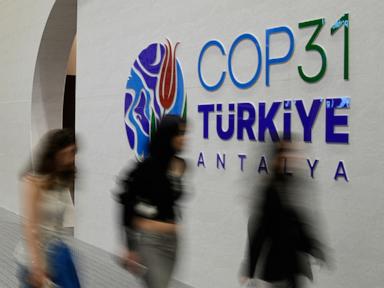
Climate talks in overtime as nations wrestle with response to worsening global warming
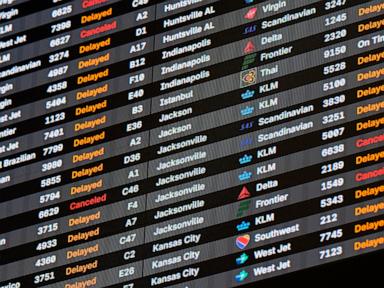
(Not) up in the air: Travelers' trepidations spike as Thanksgiving nears and tech hiccups abound

Click any stock ticker to explore its page on Blossom Social. Review key financial data, learn more about the company, explore earnings information, and see what other investors in the community are saying.
Top 10 Weekly Gainers
US and Canadian stocks over $10B market cap, 5-day price change as of November 20, 2026. Prices shown in the currency of the listed exchange (CAD for TSX; USD for NYSE and Nasdaq)
Ticker | Company | Exchange | Price | 5-Day Change |
TELUS Corporation | TSX | $15.86 | +30.6% | |
Insmed Incorporated | NasdaqGS | $141.33 | +16.7% | |
AECOM | NYSE | $78.65 | +11.6% | |
Tyson Foods Inc. | NYSE | $65.12 | +10.7% | |
Brookfield Infrastructure Partners L.P. | NYSE | $42.81 | +8.4% | |
Rogers Communications Inc. | TSX | $50.81 | +7.1% | |
Hormel Foods Corporation | NYSE | $23.54 | +6.6% | |
Palo Alto Networks Inc. | NasdaqGS | $343.32 | +6.5% | |
PDD Holdings Inc. | NasdaqGS | $83.68 | +6.0% | |
BioMarin Pharmaceutical Inc. | NasdaqGS | $60.41 | +5.6% |
Top 10 Weekly Losers
Ticker | Company | Exchange | Price | 5-Day Change |
Strategy Inc | NasdaqGS | $77.80 | -30.3% | |
Nebius Group N.V. | NasdaqGS | $81.31 | -29.8% | |
Nextpower Inc. | NasdaqGS | $67.13 | -29.4% | |
Sandisk Corporation | NasdaqGS | $79.24 | -28.4% | |
Bloom Energy Corporation | NYSE | $142.39 | -25.8% | |
CoreWeave Inc. | NasdaqGS | $39.51 | -25.6% | |
Pershing Square Inc. | NYSE | $33.61 | -24.8% | |
Credo Technology Group Holding Ltd | NasdaqGS | $99.86 | -24.1% | |
Cerebras Systems Inc. | NasdaqGS | $82.67 | -24.0% | |
Circle Internet Group Inc. | NYSE | $47.51 | -23.6% |
Most Overbought
US and Canadian stocks, Relative Strength Index as of November 20, 2026
Ticker | Company | Exchange | Sector | RSI |
ADT Inc. | NYSE | Consumer Discretionary | 82.5 | |
TELUS Corporation | TSX | Communication Services | 76.8 | |
Tyson Foods Inc. | NYSE | Consumer Staples | 76.6 | |
Brookfield Infrastructure Partners L.P. | NYSE | Utilities | 74.0 | |
Emera Incorporated | TSX | Utilities | 73.2 | |
Insmed Incorporated | NasdaqGS | Health Care | 73.2 | |
AECOM | NYSE | Industrials | 72.8 | |
Stantec Inc. | TSX | Industrials | 72.5 | |
Canadian Utilities Limited | TSX | Utilities | 70.9 | |
Hormel Foods Corporation | NYSE | Consumer Staples | 69.7 |
Most Oversold
Ticker | Company | Exchange | Sector | RSI |
NVIDIA Corporation | NasdaqGS | Information Technology | 15.1 | |
Baidu Inc. | NasdaqGS | Communication Services | 18.6 | |
Halozyme Therapeutics Inc. | NasdaqGS | Health Care | 20.0 | |
Strategy Inc | NasdaqGS | Information Technology | 20.2 | |
Salesforce Inc. | NYSE | Information Technology | 20.7 | |
Freeport-McMoRan Inc. | NYSE | Materials | 20.9 | |
Circle Internet Group Inc. | NYSE | Financials | 21.2 | |
Cummins Inc. | NYSE | Industrials | 22.0 | |
Alibaba Group Holding Limited | NYSE | Consumer Discretionary | 22.1 | |
Sea Limited | NYSE | Consumer Discretionary | 22.7 |
The Relative Strength Index (RSI) can provide a signal that suggests a stock is either overbought or oversold.
📈A stock that has an RSI over 70 is considered to be in “overbought” territory. This might suggest that the stock is due for a pullback, however it is not a recommendation to sell.
📉A stock that is trading with an RSI below 30 is considered to be in “oversold” territory. This might suggest that the stock is due for a recovery, however it is not a recommendation to buy. Always perform your own due diligence.
*Harvest ETFs Disclaimer
Commissions, management fees and expenses all may be associated with investing in ETFs managed by Harvest Portfolios Group Inc. (the “Funds” or a “Fund”). Please read the relevant prospectus before investing. The Funds’ returns are not guaranteed, their values change frequently, and past performance may not be repeated. Tax investment and all other decisions should be made with guidance from a qualified professional.
The Fund is categorized as a liquid alternative ETF. This means it has the ability to use leverage and can invest more than 10% of its assets in a single issuer. The Fund employs modest leverage of approximately 25%, which can amplify both gains and losses.
Certain statements in this communication constitute forward-looking statements (“FLS”). These statements are not historical facts but reflect the current expectations of Harvest, the Fund’s manager, regarding future results or events, and are subject to risks and uncertainties that could cause actual results to differ materially. Although Harvest believes the underlying assumptions are reasonable, FLS are not guarantees of future performance, and undue reliance should not be placed on them. Harvest undertakes no obligation to update or revise any FLS, except as required by law.
All rights to the trademarks and/or logos listed herein belong to their respective owners and Harvest ETFs use hereof does not imply any affiliation with, or endorsement by the owners of these trademarks and/or logos.
Stay connected with The Pulse

