

In partnership with

It’s Sunday, May 3, 2026. This week brought an epic leadership moment that can’t be ignored, a government budget update with some real household implications, and the abrupt end of an airline that millions of travellers depended on for cheap flights. Three very different stories, but each one says something about where we are right now. Let's get into it.

Market Recap: U.S. and Canada
It was a tale of two halves this week. The markets sold off through Tuesday and into Wednesday, with all indices sliding well into negative territory at the lows. We then saw a shift on Wednesday afternoon, when a sharp rally took hold and carried through Thursday and into Friday, erasing the week's losses and then some. The recovery was broad but tech-led, with the Nasdaq reclaiming ground fastest.
The Nasdaq 100 led the way with a weekly gain of 1.49%, followed by the S&P 500 at +0.91% and the Dow Jones at +0.55%. The TSX was the lone laggard, finishing essentially flat at -0.04%.

Week ending May 1, 2026
Major Economic Stories This Week
Bank of Canada Holds, Eyes the Energy Shock
The BoC kept its overnight rate at 2.25% in April, as energy-driven inflation complicates the outlook without yet spreading into the broader economy.

To pretty much no-one’s surprise, the Bank of Canada held rates as expected, but the rationale was more nuanced than the decision itself. Energy prices spiked in March on the back of the Middle East conflict, pushing headline inflation higher, but the BoC is watching whether that spike feeds through to broader price categories, and so far it hasn't. Inflation expectations have been nudged upward but remain anchored, which is why the hold came without a signal of what comes next. The updated GDP forecasts, 1.2% growth this year, 1.7% next, suggest the central bank sees the economy absorbing the energy shock through existing slack rather than overheating. That's a relatively constructive read, but it leaves the path forward deliberately open.
Overnight rate: held at 2.25% — in line with market expectations and prior guidance
Energy prices: primary driver of March CPI increase — linked to Middle East conflict outbreak
Broader pass-through: limited so far — BoC noted energy shock has not spread to other sectors
GDP forecast: 1.2% growth in 2026, 1.7% in 2027 — reflects excess supply absorbing the shock
The Fed Holds, But The Cracks Are Showing
The Federal Reserve kept rates at 3.5%–3.75% for a third straight meeting, but an 8-4 dissent vote revealed the most internal division since 1992.

The hold was expected, but the vote was not. Three dissenting officials objected to language in the statement which suggests the Fed will eventually resume cutting rates, not a push for actions surprisingly, but a rejection of the narrative itself. Governor Miran dissented in the other direction, voting for a 25 basis point cut. Four officials breaking from the majority in a single decision is the most since October 1992, and it removes any doubt that the surface-level calm of a coordinated hold is masking real disagreement about where policy goes from here. Powell indicated he'll remain as a Fed governor after his Chair term ends, and that adds a measure of continuity even with the internal friction. The Middle East situation was cited as a key source of uncertainty, exactly the kind of external variable that makes forward guidance nearly impossible.
Federal funds rate: held at 3.5%–3.75% — third consecutive hold
Vote: 8-4 — first time since October 1992 that four FOMC members dissented on a single decision
Governor Miran: voted to cut 25bps — sole dissenter in favour of easing
Three other dissenters: objected to language implying eventual rate cuts — a dispute over direction, not just timing
Core PCE Moves In Opposite Directions
The Fed's preferred inflation gauge rose 0.3% in March, slowing from February's 0.4% pace, but annual core PCE accelerated to 3.2%, up from 3.0%.


The monthly number provided a bit of comfort: 0.3% is better than the 0.4% seen in February, and it keeps the door open to the argument that the monthly trend is gradually cooling. But the annual figure moved the other way coming in at 3.2%, up from 3.0% in February, and it now sits 1.2 percentage points above the Fed's 2% target. And that gap isn't closing. For the Fed, a month-over-month deceleration is welcome but it’s not enough when the year-over-year trend is still drifting higher. The report landed close to expectations, so we didn’t see a huge market reaction, but it reinforces the case for holding and it gives the dissenters who pushed back on rate-cut language some additional ammunition.
Monthly core PCE: +0.3% — improved from February's +0.4%; in line with market forecasts
Annual core PCE: +3.2% — up from 3.0% in February; remains 120 basis points above the Fed's 2% target
Trend: monthly pace slowing, annual pace rising — two signals pulling in opposite directions
Market reaction: muted — result met expectations, limiting volatility in rates and equities
TOP INSIGHTS
The Fed Is More Divided Than It Appears
The 8-4 vote deserves a lot of attention. Four dissents in a single FOMC decision is historically rare, and the last time it happened was 1992, at a time we were in a very different monetary policy environment. What makes this split unusual is that the dissenters were pulling in opposite directions. One wanted a cut; three wanted the Fed to stop implying cuts are coming at all. That's a fundamental divide over the direction of policy.
For the markets, this matters more than a clean hold would. When the committee is unified, forward guidance carries weight, but when it isn't, that guidance becomes unreliable. Investors pricing in a specific rate path are doing so on the basis of a majority view that four members actively reject, and that's a significant source of uncertainty that isn't fully reflected in most projections.
My take is that the divisions will be around as long as the data stays ambiguous. A clean deceleration in inflation might give the hawks reason to hold steady and give the doves something to point to. With core PCE still running above 3% and geopolitical variables adding noise, the committee has very little to agree on. Watch the May meeting language closely. If dissents persist, the credibility of Fed forward guidance starts to erode in a more structural way.
Both Central Banks Are Playing The Same Waiting Game
The Bank of Canada and the Federal Reserve arrived at the same decision this week — hold — but for subtly different reasons. The BoC is watching an energy shock it believes the economy can absorb through excess supply. The Fed is watching a persistent inflation problem that refuses to resolve cleanly. In both cases, the answer to "what comes next?" is: we don't know yet.
The result is an alignment that matters for Canadian investors and households. When both central banks are in wait-and-see mode at the same time, the range of near-term outcomes narrows, but uncertainty about the eventual direction actually increases. A hold is not a signal of confidence. It's a signal that the data hasn't yet made the decision for them.
The practical implication for borrowers and businesses is straightforward: they can’t rate relief on any defined timeline. The BoC's GDP forecasts suggest a slow-growth scenario where cuts are possible but not urgent. Anyone building a financial plan around a specific rate-cut date is working with a softer foundation than they might realize.
Annual Core PCE Is Drifting The Wrong Way
The headline on core PCE was that the monthly pace slowed; 0.3% in March versus 0.4% in February. That's the number that fit comfortably within expectations and didn't rattle markets. But the annual figure moved the other way. Core PCE came in at 3.2% year-over-year, up from 3.0% in February. That's not the direction the Fed needs.
Monthly and annual trends diverging isn't particularly unusual at turning points, but it's the kind of divergence that deserves a closer look. A slowing monthly trend that coexists with an accelerating annual figure can reflect base effects, seasonal patterns, or genuine renewed pressure. The Fed needs to determine which it is before it can move confidently in any direction.
What I'm watching is whether the monthly pace can hold at 0.2% or below. If it does, the annual number will follow eventually, and the Fed will have the data it needs to justify a cut later this year. If monthly readings drift back toward 0.3% to 0.4%, the annual trend will keep rising, and the conversation will shift from "when do cuts start" to something more uncomfortable for rate-sensitive markets.
TOP STORY
Greg Abel Steps Out Of Buffett's Shadow

Greg Abel faces the question of whether he can replace a legend
Berkshire's $380-billion cash pile is waiting for its next big move
Operating profit fell 6% in 2025, with no major acquisitions in a decade
Abel takes control of 94% of the stock portfolio without Buffett's track record
Greg Abel hosted his first Berkshire Hathaway annual meeting in Omaha this weekend, and the challenge before him was as visible as the empty seats. Abel's message was clear and deliberate: Berkshire stays anti-bureaucracy, thinks long-term, and will deploy its enormous cash reserve when the right opportunity arrives. With $380.2 billion in cash on hand and no needle-moving acquisition in over a decade, that question of deployment is the one shareholders most want answered.
Buffett Passes The Torch, And Stays In The Room
Warren Buffett did make an appearance by video, and he praised Abel's work and confirmed he has no intention of selling a single share of the company he ran for 60 years. He used the Apple investment as his example of what patient, management-trusting capital allocation looks like; a $35-billion stake that grew to roughly $185 billion under Tim Cook. The crowd received Buffett warmly, raising a banner in his honour before he settled into his seat among the directors. His presence was a highlight, but it was left to Abel to run the room.
What Abel Is Actually Inheriting
The transition is official, but the scrutiny is just beginning. Abel has no professional history as a stock picker, yet by February he was managing 94% of Berkshire's equity portfolio, a responsibility that has always sat with Buffett. Overall operating profit fell 6% in 2025, revenue growth was essentially flat, and the company went nearly two years without a buyback before resuming in Q1 2026 with $234 million in repurchases. Abel said the long-term opportunity to deploy capital is significant. Proving he can identify it, and act on it, will be the defining test of his tenure.
Full story here.

Berkshire Hathaway has long been held up as the gold standard of long-term investing, but the scoreboard has shifted since Buffett stepped back. Since last year's announcement of his retirement as CEO, Berkshire shares have trailed the S&P 500 by 39 percentage points. Greg Abel is now in charge, carrying a $380-billion cash pile and a portfolio built over six decades by the greatest investor of his generation. Whether he can close that gap, or whether it widens, is one of the more interesting questions in markets right now. Here’s this week’s poll question.
Do you think Berkshire Hathaway's share price will outperform the S&P 500 over the next five years?
LAST WEEK’S POLL RESULTS
In last week's poll, I asked what readers thought was the most likely outcome of the USMCA review. An overwhelming 84% chose a prolonged standoff, 13% expected a similar renewed deal and just 3% anticipated major Canadian concessions. The result says a lot about the cautious mood most readers have toward trade negotiations right now, and honestly, it's hard to argue with the majority on this one. Thanks to everyone who voted.

READER COMMENTS
Prolonged Negotiations
“Carney has done a good job of pissing off the Americans and I doubt they are going want to make a favorable deal. With no economical way to get our resources to other markets and inability to refine our own, we don't have a lot of choices." — storierod
"I'm expected a prolonged standoff... Why? The current U.S. administration will want concessions and new rules all to be in their favor. I don't see Canada and/or Mexico rubber stamping those sort of U.S. demands. Who will benefit most from this chaos? IMO... It's China, both short and long-term." — callawayguy
"Trump is comfortable with extending economic pain to Canada." — patbatt01
"Trump will want more deals for USA out of Canada and Mexico. Which could lead to both countries investing more into USA than their own countries. Which will be bad for the Canadian Economy." — angellodarko
THE CANADIAN ECONOMY
Canada's Spring Economic Update: What It Means For Your Finances

Canada launches its first sovereign wealth fund with $25-billion in initial funding
No changes announced to personal or corporate income tax rates
CPP contribution rates to fall from 9.9% to 9.5% starting in January 2027
Employee Ownership Trust capital gains exemption becomes a permanent feature
Finance Minister François-Philippe Champagne tabled the Spring Economic Update on April 28 this week, introducing a mix of structural initiatives and targeted household measures. The headline announcement is the Canada Strong Fund, the country's first sovereign wealth fund, seeded with $25 billion over three years to invest in strategic Canadian projects and companies alongside private investors. Individual Canadians will have the opportunity to participate directly in the Fund, and that’s a notable inclusion for a vehicle of this kind.
Tax And Worker Measures
No changes to personal or corporate income tax rates were proposed, welcome news for households already managing elevated costs. On the worker side, CPP contribution rates are set to drop from 9.9% to 9.5% effective January 2027, translating to roughly $133 in annual savings for someone earning $70,000, with equivalent savings for their employer. The Employee Ownership Trust exemption, a $10-million capital gains exemption intended to make it easier for employees to acquire businesses from retiring owners, is being made permanent after a three-year trial. Labour mobility deductions for tradespeople are also being expanded, with the annual expense cap rising from $4,000 to $10,000.
Home Buyers And Disability Support
The Home Buyers' Plan grace period is being extended, allowing first-time buyers who make RRSP withdrawals through 2028 to defer repayment for five years rather than two before their 15-year repayment clock begins. The Disability Tax Credit application process is being streamlined for individuals with qualifying long-term conditions, and the list of medical practitioners who can certify eligibility is being broadened to include additional specialties. Neither measure changes the underlying eligibility criteria.
Read the full story here.
Men, Say Goodbye to Eyebags, Dark Spots & Wrinkles

Particle Face Cream is a 6-in-1 formula engineered specifically for men's skin. It reduces eye bags, dark spots, and wrinkles, restores firmness, hydrates deeply, and revives dull tone. Multiple premium anti-aging ingredients, clinically researched, built into one product that actually fits your routine.
Over 1,000,000 men have added Particle to their daily routine. Easy, effective, and worth the two minutes. Try it risk-free with a 30-day money-back guarantee.
THE PREDICTION MARKETS
Why The Kentucky Derby Has No Place On Prediction Markets

The Churchill Downs CEO says horse racing will never cut a deal with prediction platforms
A 1978 federal law gives track owners effective veto power over any wagering on races
Kalshi and Polymarket are locked out of horse racing entirely by industry design
Kentucky has proposed an outright ban on prediction markets and a 17.5% fee
The Kentucky Derby ran Saturday in Louisville, but if you were hoping to place a wager on Kalshi or Polymarket, you couldn’t find it there. The major prediction platforms carry no horse racing contracts, and according to Churchill Downs CEO Bill Carstanjen, that's entirely by the industry's design. Under the Interstate Horseracing Act of 1978, any wagering on races requires explicit permission from the host track, the horsemen's group, and the state racing commission. Churchill Downs has no interest in granting that permission.
A Protected Structure With Deep Roots
Horse racing predates modern sports betting in the US by centuries, and the legal framework reflects it. The 1978 Act created a protected structure for the industry — one that prediction platforms, regulated by the CFTC rather than state gambling commissions, have found no way around. Carstanjen was direct: prediction markets would undermine the economic model that funds race purses, which are financed through traditional pari-mutuel wagering.
A Larger Regulatory Collision
The Derby situation is a small window into a much bigger conflict. Prediction platforms argue they're trading venues rather than gambling operations, and that CFTC oversight exempts them from state licensing requirements. States disagree, and Kentucky has gone further than most, proposing legislation that would ban its gambling licensees from participating in prediction markets entirely, alongside a 17.5% tax on platform fees. The CFTC has been filing suits to prevent states from taking action. That broader battle is far from settled, and the Derby's quiet exclusion from the prediction market landscape is just one front in it.
Read the full story here.
AVIATION
The End Of Spirit Airlines: A Budget Era Closes

Spirit Airlines ceased all operations at 3 a.m. on May 2, 2026
Thousands of passengers stranded mid-trip with no staff, no service, and no flights
Major carriers launched capped rescue fares around $200 to absorb displaced travellers
Spirit's collapse is the first major US airline failure due to financial trouble in 25 years
Spirit Airlines shut down for good early Saturday morning, ending 34 years of operation and leaving thousands of travellers stranded at airports across the country. A note taped to a counter at LaGuardia Airport said it plainly: all flights cancelled, customer service unavailable, staff gone. The scenes that followed, including confused travellers arriving for graduations, family funerals, and Mother's Day trips, pretty much told the story of just how abruptly the collapse arrived. Passengers described checking their flights the night before and finding everything normal.
The End Of A Budget Era
Spirit's failure is the first time in 25 years a major US airline has folded due to financial difficulty. The company, in its second bankruptcy, was unable to secure a last-minute rescue deal and moved directly to wind-down. For years, Spirit was as much a punchline as a carrier; the airline people mocked and still flew, because the fares were simply that cheap. Travellers shared memories of $11 tickets and cross-country flights for $13, describing Spirit as a genuine lifeline for low-income families, frontline workers, and anyone priced out of the mainline carriers. Flight attendants marked the moment with grief. "This is in our blood," the flight attendants' union wrote in its message to members.
What Comes Next For Passengers And Workers
Other airlines moved quickly to fill the void, with Frontier, Southwest, American, United, JetBlue, and Delta all announcing capped rescue fares, most around $200, for stranded Spirit passengers. American and United opened hiring portals specifically for Spirit employees, and the Department of Transportation confirmed coordination with carriers to provide travel privileges for displaced workers. Refunds will be issued automatically, though customers with more complicated situations were advised to explore credit card chargebacks, travel insurance, or formal bankruptcy claims. Roughly 10,000 Spirit employees are now without work.
Full Story Here


Amid growing calls to limit teens' use of AI chatbots, are parental controls enough?
Concerns are growing about how some young people engage with AI chatbots. Meta is rolling out a tool to let parents monitor topics their children discuss at the same time as Manitoba is proposing banning use of AI chatbots for youth. More research is needed, but evidence suggests some risk factors for mental health.

Canada's new sovereign wealth fund: What Ottawa can learn from Alberta
Alberta launched its sovereign wealth fund decades ago, but it was regularly poached by politicians, which is why the bank balance failed to meaningfully grow.
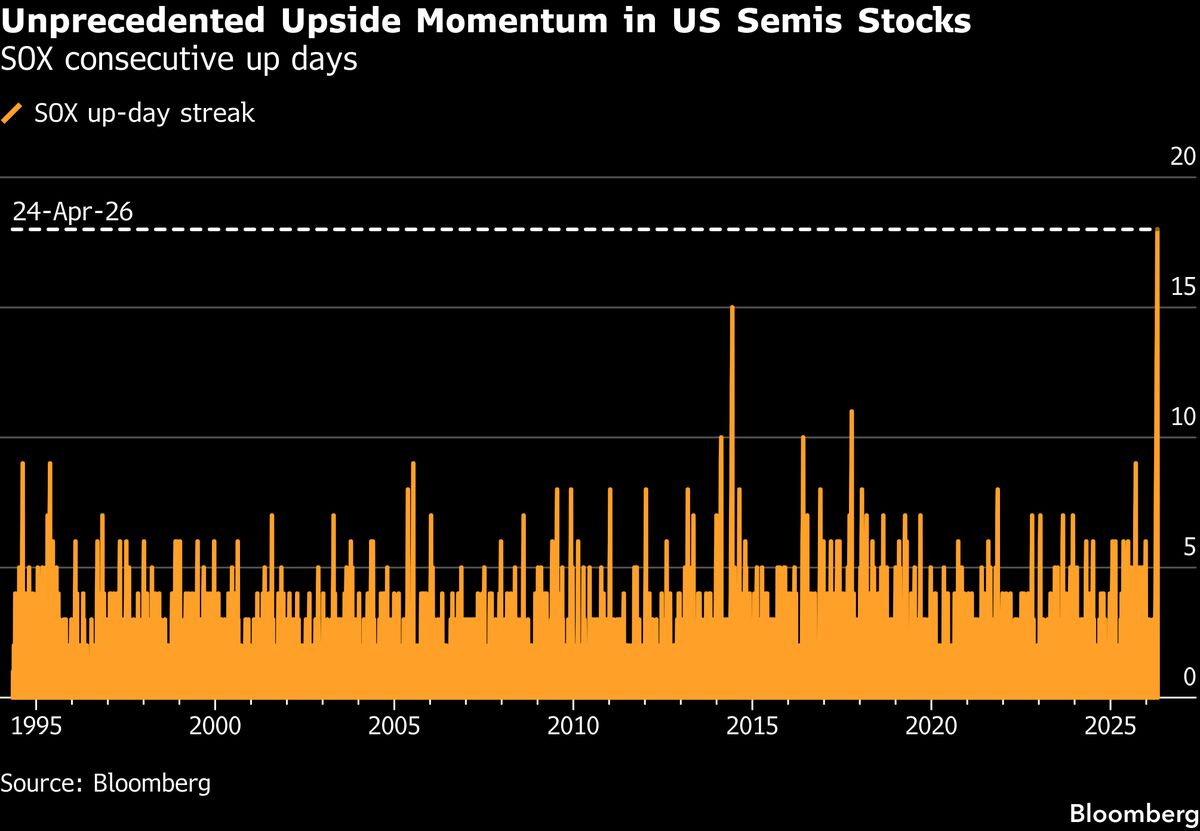
Traders Grapple With Two-Sided Tail Risk as Stocks Regain Highs
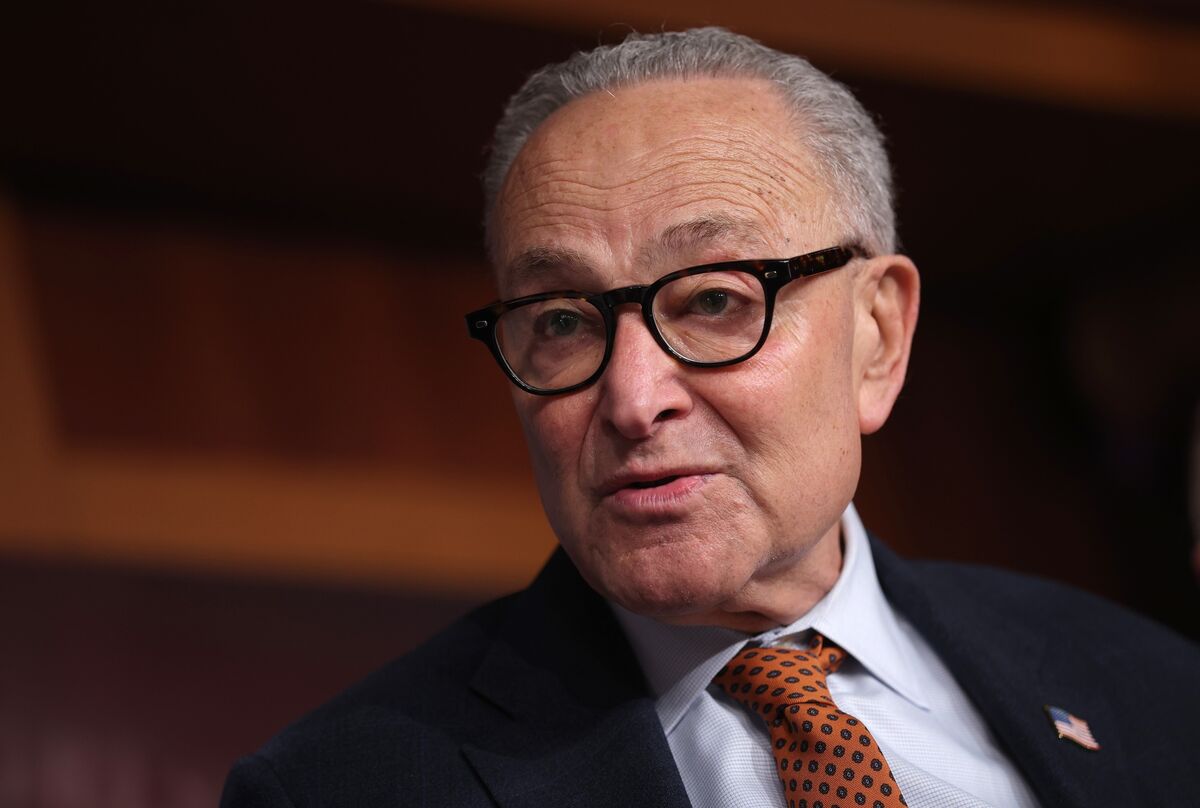
Schumer Says House, White House Must Ban Prediction Market Bets





Week ending May 1, 2026 | Market Cap > $10 Billion USD

Week ending May 1, 2026 | based on 14-Day RSI | Market Cap > $10 Billion USD
The Relative Strength Indicator (RSI) can provide a signal that suggest a stock is either overbought or oversold.
📈A stock that has an RSI over 70 is considered to be in “overbought” territory. This might suggest that the stock is due for a pullback, however it is not a recommendation to sell.
📉A stock that is trading with an RSI below 30 is considered to be in “oversold” territory. This might suggest that the stock is due for a recovery, however it is not a recommendation to buy. Always perform your own due diligence.
